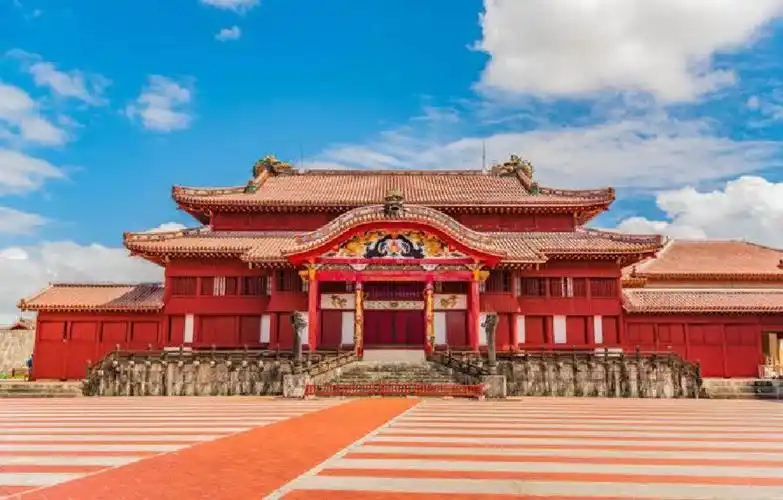
The Ryukyu Pavilion, located in Fuzhou’s Sanfang Qixiang historic district, is a precious cultural heritage site that seamlessly integrates architectural artistry with humanistic history. Often hailed as a "living fossil" of Sino-Japanese cultural exchange, it masterfully blends Ryukyuan architectural styles with traditional southern Fujian craftsmanship, creating a unique aesthetic that embodies cultural fusion.
Within the pavilion, upturned eaves, intricately carved beams, and vividly painted rafters showcase the elegance and dynamism characteristic of Ryukyuan architecture. At the same time, elements typical of southern Fujian—such as red brick walls, gray roof tiles, wood carvings, and stone engravings—are harmoniously incorporated, resulting in a distinctive architectural style found nowhere else.
The pavilion features multiple exhibition areas, including the Ryukyu Culture Display Zone, the Historical Artifacts Exhibition Hall, and an Interactive Experience Area. Among its highlights is a meticulously crafted scale model reconstructing ancient Ryukyuan buildings, offering visitors an immersive glimpse into the past as if transported through time. Additionally, the pavilion houses a rich collection of rare artifacts, including Ryukyuan ceramics, calligraphy, and ancient manuscripts, which collectively illustrate the deep historical ties between China and Japan in politics, economics, and culture.
Originally built during the late Ming to early Qing dynasties, the Ryukyu Pavilion served as a key venue for diplomatic and cultural exchanges between Chinese officials and Ryukyuan envoys. It notably witnessed interactions between the famed Ming dynasty navigator Zheng He and Ryukyuan emissaries. More than just a silent witness to history, the pavilion stands as a powerful symbol of Sino-Japanese friendship, carrying profound cultural significance and historical memory.