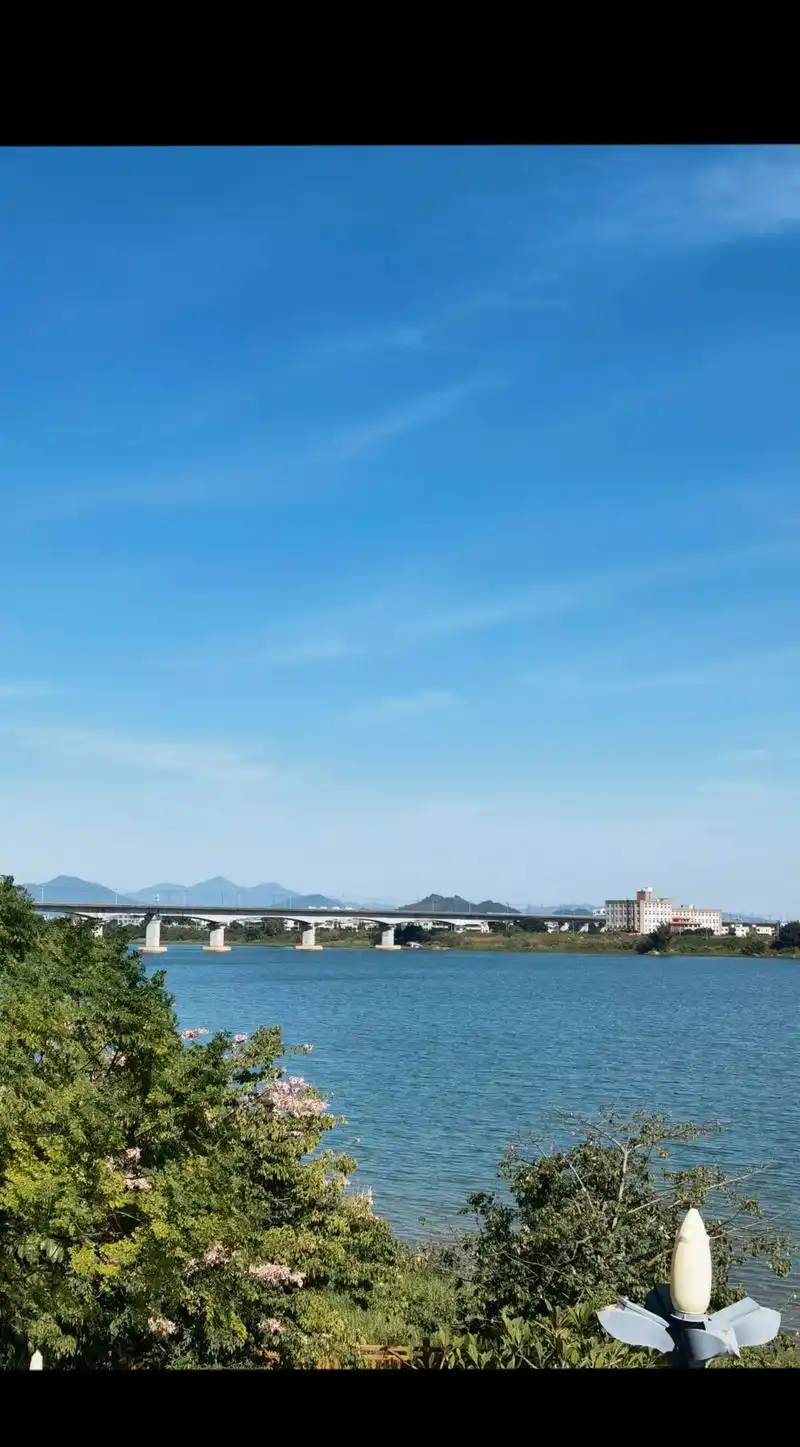
The Han River winds around the ancient city of Chaozhou like a jade-green ribbon, forming the most poetic natural scroll in eastern Guangdong. Its waters are as clear as a mirror, flanked by undulating hills. At dusk, scattered fishing lights shimmer along the banks, harmonizing with rows of qilou buildings clad in dark tiles and grey bricks to create a living ink-wash painting. A nighttime boat ride reveals neon reflections shattering into countless stars upon the river’s surface, dancing alongside the swaying shadows of thousand-year-old banyan trees—a dreamlike journey through time.
Following the river, one encounters the majestic Guangji Bridge—masterpiece of Ming-dynasty architecture—whose eighteen piers and twenty-four arches play delightfully against the flowing water. Nearby, the Han Wengong Temple, dedicated to the Tang-dynasty literary giant Han Yu, is shaded by ancient cypresses; its stone inscriptions echo Han Yu’s timeless verse: “The tide levels out, broadening both shores.” Further downstream, the riverside promenade of Jiangdong New District seamlessly blends the brilliance of a modern metropolis with pristine natural ecology. On the river’s midstream islet, gnarled roots of venerable banyans spread like serpents beneath canopies spreading wide as umbrellas—these trees serve as Chaozhou’s cherished “green lungs,” deeply rooted in local memory.
Since ancient times, the Han River has inspired poets and scholars alike. Su Shi of the Northern Song Dynasty once sailed these waters, composing verses amid its beauty, while Wen Tianxiang, the patriotic Southern Song poet, penned his resolute Ode to Righteousness here. The river nourishes not only Chaozhou’s land but also the cultural lineage of this “Zou and Lu by the Sea”—a region famed for its scholarly traditions. Drifting through its currents aboard an ornate pleasure boat, one can feel both the warmth of a millennium-old city and the vibrant, enduring pulse of Chaoshan culture.