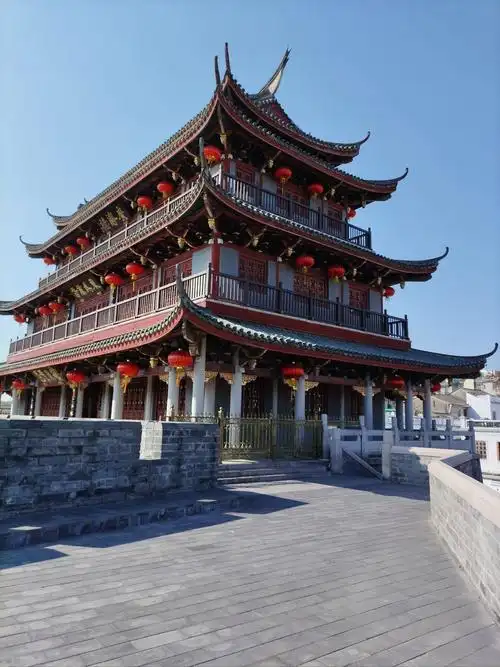
Chaozhou Ancient City Wall, built upon a Ming-dynasty rammed-earth foundation with surviving blue-brick structures, winds along the banks of the Han River like a dragon’s spine. The weathered bricks are engraved with totems of the “Eight Scenic Views of Chaozhou,” and inscriptions left by Ming-era frontier soldiers remain discernible among the ruins of arrow towers—each brick and stone embodying Chaozhou’s thousand-year cultural legacy. Beneath the “Ying Xu” (Welcoming the Dawn) plaque at Chaoyang Gate, the tides of the Han River lap against the Ming-era moat, echoing as if across time itself. At the Nanmen Wengcheng (barbican) ruins, chisel marks from Ming soldiers who fought against Japanese pirates still linger, testifying to Chaozhou’s historic role as a strategic military stronghold on China’s southeastern coast.
Once serving as the protective rampart for the Chaozhou Prefectural Government and a crucial land checkpoint along the Maritime Silk Road, the city wall offers panoramic views from its western battlements: the sails on the Han River shimmer alongside the arcade-lined streets of old Chaozhou. On the stone steps beneath ancient banyan trees, the four-character inscription “Hai Guo Teng Jiao” (“A Dragon Soars Over the Maritime Realm”) remains, calligraphed by Li Guangdi, a Qing-dynasty scholar and imperial examination graduate. Along the wall lie the remains of twelve Ming-era beacon towers; notably, the ruined Dongmen Arrow Tower preserves a stele from the “Chaozhou Three Loyalists Shrine,” commemorating the tragic yet heroic tale of descendants of Tang dynasty general Zhang Xun who defended this site during the late Ming resistance against the Qing.
As the only fully preserved Ming-dynasty city wall in Lingnan, the Chaozhou Ancient City Wall is not merely a living fossil of historical military architecture but also a three-dimensional chronicle of Chaozhou’s enduring cultural heritage. At the foot of the wall, Bijia Hill and Dongyan Rock once served as places where Han Yu, the famed Tang literary figure, gazed longingly toward his homeland during his exile. Meanwhile, remnants of the Chaozhou Guild Hall atop the wall recount the legendary saga of overseas Chaozhou merchants whose ethos was “home is wherever the seas extend.” Every blue brick whispers how this ancient city fused Central Plains civilization with maritime culture to forge its unique Chaozhou character.