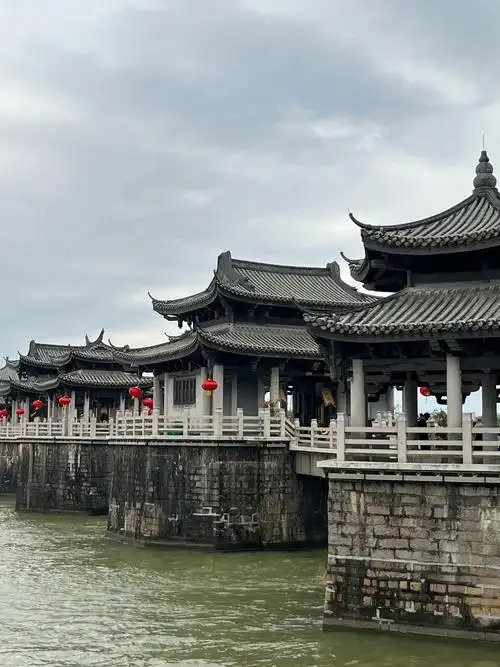
Guangji Bridge, located in Chaozhou, Guangdong Province, is a remarkable ancient bridge that blends engineering ingenuity with rich cultural heritage. Built during the Ming Dynasty (1573–1620), it is one of China’s most distinctive bridges due to its unique design: it consists of 18 stone piers with a central section that can be opened to allow boats to pass—a feature rare among Chinese bridges. This movable section, known as the 'boat passage,' reflects both practical urban planning and the importance of river trade in historical Chaozhou. The bridge also serves as a symbol of local craftsmanship, with intricate carvings, traditional roof structures, and elegant stone lions adorning its railings. Visitors are encouraged to explore the bridge at sunrise or sunset for breathtaking views of the Han River and surrounding temples. Cultural enthusiasts will appreciate the bridge’s role in connecting communities and preserving Chaozhou’s identity as a hub of tea culture, folk arts, and Confucian values. It's not just a structure—it's a living museum of Southern Chinese history and artistry.