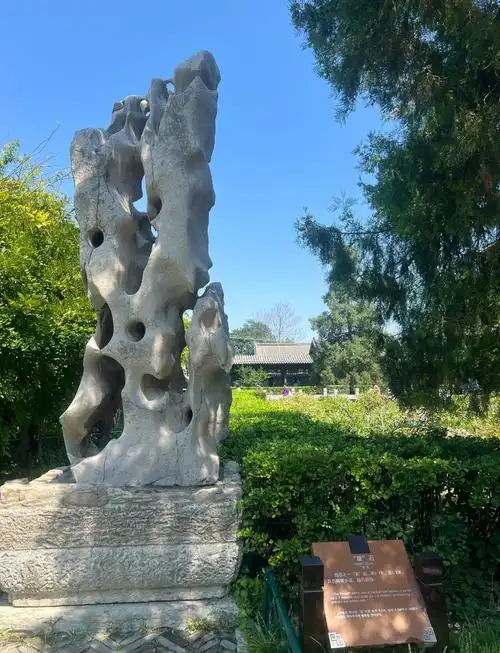
Ou Garden, located in Weifang City, Shandong Province, is a treasure of Qing dynasty garden architecture, renowned for its ingenious "garden-within-a-garden" layout and regarded as a quintessential example of how literati expressed their poetic sentiments toward nature. At its core lie meticulously stacked rockeries and meandering waterways, with winding paths leading to secluded spots—condensing the grandeur of natural landscapes into a compact space. Every step reveals a new vista, fully embodying the aesthetic essence of traditional Chinese gardens. The artificial hills rise like mist-shrouded clouds; the watercourses flow gracefully like ink wash paintings; pavilions, terraces, and towers are arranged with rhythmic harmony, subtly reflecting the garden-making philosophy of "mutual interplay between concealment and revelation," transporting visitors into a living poem or painting.
The central highlight, Tingyu Pavilion ("Pavilion of Listening to Rain"), stands at the garden's highest point. From here, one can take in the entire landscape; the chime of wind bells beneath the eaves blends melodiously with the sound of raindrops falling on banana leaves. Nearby, Guanlan Pavilion ("Pavilion for Viewing the Rippling Waters") sits beside the water, its stone balustrades engraved with rubbings from Wang Xizhi’s famed "Preface to the Poems Composed at the Orchid Pavilion," evoking nostalgic admiration for the refined spirit of the Wei-Jin era. The garden’s library, Yunxiang Pavilion ("Pavilion of Fragrant Herbs"), once served as a gathering place for scholars; traces of inked inscriptions still linger on its beams and pillars. Particularly exquisite is the "Twin Pavilions Facing the Moon"—two square pavilions with upturned eaves stand opposite each other across the water, their reflections shimmering under moonlight, perfectly echoing the Eastern philosophical ideal of "harmony between humanity and nature."
Originally built during the Qing dynasty by a local official inspired by Jiangnan-style gardens, Ou Garden uniquely fuses the boldness of northern Chinese gardens with the delicacy of southern ones. Deeply influenced by literati painting, its design masterfully employs "borrowed scenery," seamlessly incorporating distant mountain ranges into its pictorial composition. Numerous inscriptions and couplets throughout the garden—such as the plaque reading "Occasional Leisure"—reveal the owner’s transcendent detachment from worldly concerns. The Qing dynasty poet Zhang Elic once lived in seclusion here and composed the celebrated "Record of Ou Garden," further imbuing the site with the reclusive spirit of classical Chinese literati and establishing it as a cultural landmark in the Qilu region.