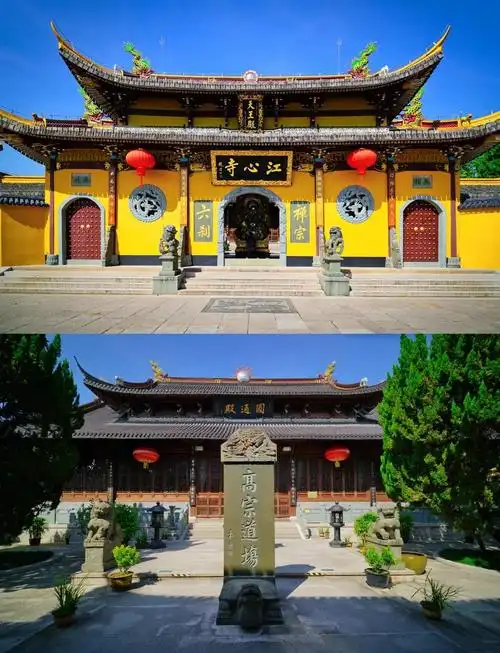
Jiān Xīn Sì is located in the middle of the Ōujiang River in Wenzhou, surrounded by water on three sides. Its thousand-year-old temple was built leaning against the river, with soaring eaves and upturned corners swaying gently in the wind, dancing with the river’s shimmering surface. The temple was originally named “Jiang Xin Yuan” during the Tang Dynasty, and was later rebuilt and expanded into a temple during the Northern Song Dynasty’s Taiping Xingguo period. It became a significant center for Buddhist Zen in Southeast China. Inside, ancient trees tower high, and winding grey stone paths lead to the Grand Treasure Hall. A bronze bell hangs above an ancient camphor tree in front of the hall, its sound carried by the wind into the river, echoing along the riverbanks. Stone carvings are scattered around the temple, with inscriptions written by countless literary figures and artists over the centuries, most notably the inscription “Jiang Xin Si” written by Su Shi (a Northern Song literary master) in the Song Dynasty, which is particularly vigorous and expressive, revealing a deep understanding of the Zen landscape. The temple was founded in the Tang Dynasty and initially named “Jiang Xin Yuan.” It was later rebuilt and expanded into a temple during the Northern Song Dynasty’s Taiping Xingguo period, becoming a key center for Buddhist Zen in Southeast China. Inside, ancient trees tower high, and winding grey stone paths lead to the Grand Treasure Hall. A bronze bell hangs above an ancient camphor tree in front of the hall, its sound carried by the wind into the river, echoing along the riverbanks. Stone carvings are scattered around the temple, with inscriptions written by countless literary figures and artists over the centuries, most notably the inscription “Jiang Xin Si” written by Su Shi (a Northern Song literary master) in the Song Dynasty, which is particularly vigorous and expressive, revealing a deep understanding of the Zen landscape. The temple was founded in the Tang Dynasty and initially named “Jiang Xin Yuan.” It was later rebuilt and expanded into a temple during the Northern Song Dynasty’s Taiping Xingguo period, becoming a key center for Buddhist Zen in Southeast China. Inside, ancient trees tower high, and winding grey stone paths lead to the Grand Treasure Hall. A bronze bell hangs above an ancient camphor tree in front of the hall, its sound carried by the wind into the river, echoing along the riverbanks. Stone carvings are scattered around the temple, with inscriptions written by countless literary figures and artists over the centuries, most notably the inscription “Jiang Xin Si” written by Su Shi (a Northern Song literary master) in the Song Dynasty, which is particularly vigorous and expressive, revealing a deep understanding of the Zen landscape. The temple was founded in the Tang Dynasty and initially named “Jiang Xin Yuan.” It was later rebuilt and expanded into a temple during the Northern Song Dynasty’s Taiping Xingguo period, becoming a key center for Buddhist Zen in Southeast China. Inside, ancient trees tower high, and winding grey stone paths lead to the Grand Treasure Hall. A bronze bell hangs above an ancient camphor tree in front of the hall, its sound carried by the wind into the river, echoing along the riverbanks. Stone carvings are scattered around the temple, with inscriptions written by countless literary figures and artists over the centuries, most notably the inscription “Jiang Xin Si” written by Su Shi (a Northern Song literary master) in the Song Dynasty, which is particularly vigorous and expressive, revealing a deep understanding of the Zen landscape. The temple was founded in the Tang Dynasty and initially named “Jiang Xin Yuan.” It was later rebuilt and expanded into a temple during the Northern Song Dynasty’s Taiping Xingguo period, becoming a key center for Buddhist Zen in Southeast China. Inside, ancient trees tower high, and winding grey stone paths lead to the Grand Treasure Hall. A bronze bell hangs above an ancient camphor tree in front of the hall, its sound carried by the wind into the river, echoing along the riverbanks. Stone carvings are scattered around the temple, with inscriptions written by countless literary figures and artists over the centuries, most notably the inscription “Jiang Xin Si” written by Su Shi (a Northern Song literary master) in the Song Dynasty, which is particularly vigorous and expressive, revealing a deep understanding of the Zen landscape. The temple was founded in the Tang Dynasty and initially named “Jiang Xin Yuan.” It was later rebuilt and expanded into a temple during the Northern Song Dynasty’s Taiping Xingguo period, becoming a key center for Buddhist Zen in Southeast China. Inside, ancient trees tower high, and winding grey stone paths lead to the Grand Treasure Hall. A bronze bell hangs above an ancient camphor tree in front of the hall, its sound carried by the wind into the river, echoing along the riverbanks. Stone carvings are scattered around the temple, with inscriptions written by countless literary figures and artists over the centuries, most notably the inscription “Jiang Xin Si” written by Su Shi (a Northern Song literary master) in the Song Dynasty, which is particularly vigorous and expressive, revealing a deep understanding of the Zen landscape. The temple was founded in the Tang Dynasty and initially named “Jiang Xin Yuan.” It was later rebuilt and expanded into a temple during the Northern Song Dynasty’s Taiping Xingguo period, becoming a key center for Buddhist Zen in Southeast China. Inside, ancient trees tower high, and winding grey stone paths lead to the Grand Treasure Hall. A bronze bell hangs above an ancient camphor tree in front of the hall, its sound carried by the wind into the river, echoing along the riverbanks. Stone carvings are scattered around the temple, with inscriptions written by countless literary figures and artists over the centuries, most notably the inscription “Jiang Xin Si” written by Su Shi (a Northern Song literary master) in the Song Dynasty, which is particularly vigorous and expressive, revealing a deep understanding of the Zen landscape. The temple was founded in the Tang Dynasty and initially named “Jiang Xin Yuan.” It was later rebuilt and expanded into a temple during the Northern Song Dynasty’s Taiping Xingguo period, becoming a key center for Buddhist Zen in Southeast China. Inside, ancient trees tower high, and winding grey stone paths lead to the Grand Treasure Hall. A bronze bell hangs above an ancient camphor tree in front of the hall, its sound carried by the wind into the river, echoing along the riverbanks. Stone carvings are scattered around the temple, with inscriptions written by countless literary figures and artists over the centuries, most notably the inscription “Jiang Xin Si” written by Su Shi (a Northern Song literary master) in the Song Dynasty, which is particularly vigorous and expressive, revealing a deep understanding of the Zen landscape. The temple was founded in the Tang Dynasty and initially named “Jiang Xin Yuan.” It was later rebuilt and expanded into a temple during the Northern Song Dynasty’s Taiping Xingguo period, becoming a key center for Buddhist Zen in Southeast China. Inside, ancient trees tower high, and winding grey stone paths lead to the Grand Treasure Hall. A bronze bell hangs above an ancient camphor tree in front of the hall, its sound carried by the wind into the river, echoing along the riverbanks. Stone carvings are scattered around the temple, with inscriptions written by countless literary figures and artists over the centuries, most notably the inscription “Jiang Xin Si” written by Su Shi (a Northern Song literary master) in the Song Dynasty, which is particularly vigorous and expressive, revealing a deep understanding of the Zen landscape. The temple was founded in the Tang Dynasty and initially named “Jiang Xin Yuan.” It was later rebuilt and expanded into a temple during the Northern Song Dynasty’s Taiping Xingguo period, becoming a key center for Buddhist Zen in Southeast China. Inside, ancient trees tower high, and winding grey stone paths lead to the Grand Treasure Hall. A bronze bell hangs above an ancient camphor tree in front of the hall, its sound carried by the wind into the river, echoing along the riverbanks. Stone carvings are scattered around the temple, with inscriptions written by countless literary figures and artists over the centuries, most notably the inscription “Jiang Xin Si” written by Su Shi (a Northern Song literary master) in the Song Dynasty, which is particularly vigorous and expressive, revealing a deep understanding of the Zen landscape. The temple was founded in the Tang Dynasty and initially named “Jiang Xin Yuan.” It was later rebuilt and expanded into a temple during the Northern Song Dynasty’s Taiping Xingguo period, becoming a key center for Buddhist Zen in Southeast China. Inside, ancient trees tower high, and winding grey stone paths lead to the Grand Treasure Hall. A bronze bell hangs above an ancient camphor tree in front of the hall, its sound carried by the wind into the river, echoing along the riverbanks. Stone carvings are scattered around the temple, with inscriptions written by countless literary figures and artists over the centuries, most notably the inscription “Jiang Xin Si” written by Su Shi (a Northern Song literary master) in the Song Dynasty, which is particularly vigorous and expressive, revealing a deep understanding of the Zen landscape. The temple was founded in the Tang Dynasty and initially named “Jiang Xin Yuan.” It was later rebuilt and expanded into a temple during the Northern Song Dynasty’s Taiping Xingguo period, becoming a key center for Buddhist Zen in Southeast China. Inside, ancient trees tower high, and winding grey stone paths lead to the Grand Treasure Hall. A bronze bell hangs above an ancient camphor tree in front of the hall, its sound carried by the wind into the river, echoing along the riverbanks. Stone carvings are scattered around the temple, with inscriptions written by countless literary figures and artists over the centuries, most notably the inscription “Jiang Xin Si” written by Su Shi (a Northern Song literary master) in the Song Dynasty, which is particularly vigorous and expressive, revealing a deep understanding of the Zen landscape. The temple was founded in the Tang Dynasty and initially named “Jiang Xin Yuan.” It was later rebuilt and expanded into a temple during the Northern Song Dynasty’s Taiping Xingguo period, becoming a key center for Buddhist Zen in Southeast China. Inside, ancient trees tower high, and winding grey stone paths lead to the Grand Treasure Hall. A bronze bell hangs above an ancient camphor tree in front of the hall, its sound carried by the wind into the river, echoing along the riverbanks. Stone carvings are scattered around the temple, with inscriptions written by countless literary figures and artists over the centuries, most notably the inscription “Jiang Xin Si” written by Su Shi (a Northern Song literary master) in the Song Dynasty, which is particularly vigorous and expressive, revealing a deep understanding of the Zen landscape. The temple was founded in the Tang Dynasty and initially named “Jiang Xin Yuan.” It was later rebuilt and expanded into a temple during the Northern Song Dynasty’s Taiping Xingguo period, becoming a key center for Buddhist Zen in Southeast China. Inside, ancient trees tower high, and winding grey stone paths lead to the Grand Treasure Hall. A bronze bell hangs above an ancient camphor tree in front of the hall, its sound carried by the wind into the river, echoing along the riverbanks. Stone carvings are scattered around the temple, with inscriptions written by countless literary figures and artists over the centuries, most notably the inscription “Jiang Xin Si” written by Su Shi (a Northern Song literary master) in the Song Dynasty, which is particularly vigorous and expressive, revealing a deep understanding of the Zen landscape. The temple was founded in the Tang Dynasty and initially named “Jiang Xin Yuan.” It was later rebuilt and expanded into a temple during the Northern Song Dynasty’s Taiping Xingguo period, becoming a key center for Buddhist Zen in Southeast China. Inside, ancient trees tower high, and winding grey stone paths lead to the Grand Treasure Hall. A bronze bell hangs above an ancient camphor tree in front of the hall, its sound carried by the wind into the river, echoing along the riverbanks. Stone carvings are scattered around the temple, with inscriptions written by countless literary figures and artists over the centuries, most notably the inscription “Jiang Xin Si” written by Su Shi (a Northern Song literary master) in the Song Dynasty, which is particularly vigorous and expressive, revealing a deep understanding of the Zen landscape. The temple was founded in the Tang Dynasty and initially named “Jiang Xin Yuan.” It was later rebuilt and expanded into a temple during the Northern Song Dynasty’s Taiping Xingguo period, becoming a key center for Buddhist Zen in Southeast China. Inside, ancient trees tower high, and winding grey stone paths lead to the Grand Treasure Hall. A bronze bell hangs above an ancient camphor tree in front of the hall, its sound carried by the wind into the river, echoing along the riverbanks. Stone carvings are scattered around the temple, with inscriptions written by countless literary figures and artists over the centuries, most notably the inscription “Jiang Xin Si” written by Su Shi (a Northern Song literary master) in the Song Dynasty, which is particularly vigorous and expressive, revealing a deep understanding of the Zen landscape. The temple was founded in the Tang Dynasty and initially named “Jiang Xin Yuan.” It was later rebuilt and expanded into a temple during the Northern Song Dynasty’s Taiping Xingguo period, becoming a key center for Buddhist Zen in Southeast China. Inside, ancient trees tower high, and winding grey stone paths lead to the Grand Treasure Hall. A bronze bell hangs above an ancient camphor tree in front of the hall, its sound carried by the wind into the river, echoing along the riverbanks. Stone carvings are scattered around the temple, with inscriptions written by countless literary figures and artists over the centuries, most notably the inscription “Jiang Xin Si” written by Su Shi (a Northern Song literary master) in the Song Dynasty, which is particularly vigorous and expressive, revealing a deep understanding of the Zen landscape. The temple was founded in the Tang Dynasty and initially named “Jiang Xin Yuan.” It was later rebuilt and expanded into a temple during the Northern Song Dynasty’s Taiping Xingguo period, becoming a key center for Buddhist Zen in Southeast China. Inside