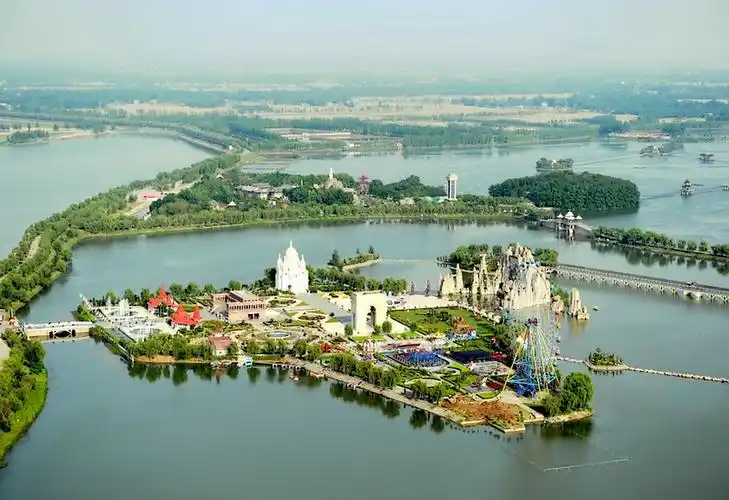
Bali Lake, nestled in the eastern part of Jiujiang city like a jade-green platter, spans a water surface area of 35 square kilometers. Its crystal-clear waters mirror the lush vegetation along its banks and the glass facades of modern buildings, creating an ecological tableau where natural scenery and urban skyline harmoniously blend. Encircling the lake is an 18-kilometer greenway—a paradise for cyclists—along which egrets dance gracefully and black-headed gulls circle overhead. The spectacle is especially breathtaking during spring migration season, when tens of thousands of waterfowl rise and alight on the lake like flowing stars.
The Wetland Park features birdwatching platforms and an educational promenade, allowing visitors to observe rare waterfowl up close and immerse themselves in nature’s rhythms.
Jiujiang Bridge and Jiuling Pavilion stand as modern landmarks along the lakeshore. The bridge soars across the lake from north to south, bustling with traffic, while Jiuling Pavilion offers panoramic views from its elevated vantage point, revealing the full splendor of lake and mountain vistas. Scattered across the lake are numerous islands, among which “Xiaogushan” (Little Lonely Mountain) is the most renowned. Resembling a solitary peak rising abruptly from the water, it was historically known simply as “Gushan” (Lonely Mountain) and served as a favored destination for poets and scholars to compose verses.
Historically named “Bali Bo” (Bali Pool), Bali Lake once formed a vital segment of the Yangtze River shipping route. The Northern Song dynasty literary giant Su Shi once sailed here and composed poetry, leaving behind the celebrated line: “The spring hues of Bali Lake arrive early”—a verse that imbues these waters with profound cultural heritage.
Today, Bali Lake functions both as the city’s “green lung,” offering residents a place of respite, and as an ecological art gallery where nature and culture intertwine, embodying the timeless theme of harmonious coexistence between humanity and the natural world.