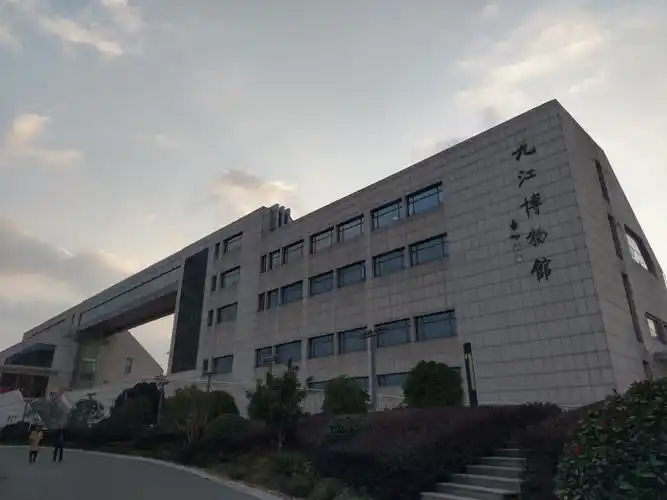
Located at the confluence of the Yangtze River and Poyang Lake, Jiujiang Museum positions itself as a microcosm of the millennia-old Gan-Po civilization. Housing over 10,000 cultural relics—including bronzes, ceramics, ancient books, calligraphy, and paintings—the museum traces Jiujiang’s cultural lineage from antiquity to the present. Its defining feature lies in the unique interplay between water and land, vividly illustrated through three thematic exhibition halls: "Riverine Civilization," "Porcelain Capital Treasures," and "Echoes of Chu Culture," highlighting Jiujiang’s historical significance as a major Yangtze River port and an ancient "Porcelain Capital."
Among its prized possessions is the "Western Han Yue King Sword," whose blade gleams with a chilling sharpness and bears inscriptions in Chu script, testifying to the cultural encounter between Wu-Yue and Chu civilizations. Also notable is a Song dynasty Qingbai porcelain pillow, with its lustrous glaze and paper-thin body exemplifying the pinnacle of Jingdezhen ceramic craftsmanship. In the folk culture section, visitors can immerse themselves in intangible heritage displays such as the "Ninety-Nine Cold-Dissolving Chart" and "Lushan Cloud-and-Mist Tea," experiencing the wisdom embedded in daily life along the Gan-Po region.
Jiujiang, established as a commandery as early as the Qin Dynasty, has long attracted poets, scholars, and officials throughout history. Tao Yuanming, the Eastern Jin poet, retired here to a rustic life, leaving behind his immortal verse, “Picking chrysanthemums beneath the eastern hedge.” Hai Rui, a Ming Dynasty official renowned for his integrity, once served as Jiujiang’s prefect, and tales of his incorruptible governance endure to this day. The museum features a special “Jiujiang Figures Corridor,” where multimedia technology brings to life pivotal historical moments—such as Tang poet Li Bo dredging Poyang Lake and late-Qing reformer Chen Baozhen implementing progressive policies—revealing the profound bond between this “River City” and its storied past. Strolling through the galleries feels like journeying across a thousand years of mist-shrouded waters, touching the epic of a city whose destiny flows inseparably with its rivers.