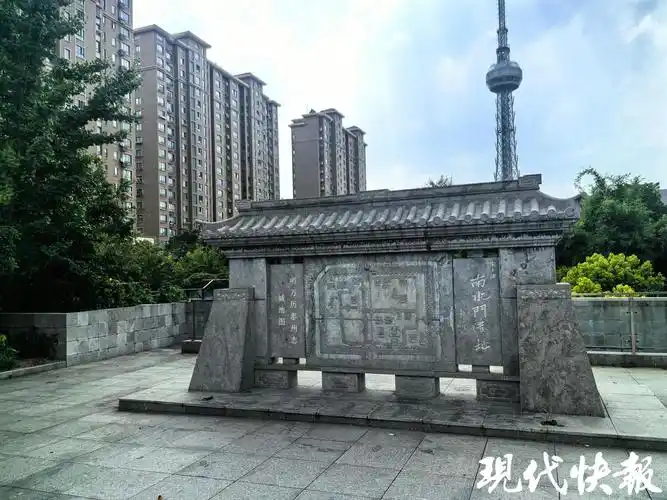
The Taizhou City Wall Ruins were first constructed during the Ming Dynasty. Today, the remaining sections of the wall and the surrounding moat complement each other beautifully, forming one of the best-preserved Ming-Qing-era urban defense systems in the Jianghuai region. The weathered bricks and stones silently recount six centuries of history and upheaval. Built along the natural contours of the terrain, the wall’s foundations wind their way through the landscape, reaching a maximum height of 15 meters. Within the rammed-earth layers, Ming-era bricks—each meticulously laid by craftsmen and inscribed with the characters “Taizhou”—remain clearly visible, testifying to the city's strategic military importance as a vital hub connecting land and water routes. Along the moat, stone-carved slogans such as “Vigilance” and “Hold Firm,” engraved in bold regular script on the bricks, still convey a sense of urgency, as if echoing the bugle calls of ancient sentries.
Key highlights include:
- The ruins of a Ming-era barbican, where half of the arched gate remains intact, crowned by a well-preserved stone plaque bearing the inscription “Mighty Over Jiangnan.”
- The “Water Gate” in the eastern section, where brick-built water channels seamlessly merge with the wall, once serving as a critical artery for grain transport via the imperial canal system.
- The foundation of the “Wanghai Tower” (Tower Overlooking the Sea) in the western part, from which visitors can enjoy a panoramic view of the majestic confluence of the Yangtze River and the Beijing-Hangzhou Grand Canal.
The site also preserves the remains of a Ming military encampment. Scattered among the rammed-earth platforms are arrowheads and bronze gongs, silently narrating the story of Li Dongyang—a Ming official—who once oversaw the construction and reinforcement of these fortifications.
As a crucial military bulwark in the Jianghuai region, the Taizhou city wall played a key role in repelling Japanese pirate raids. The renowned Ming general Qi Jiguang, famed for his anti-pirate campaigns, once stationed troops here. More than just a testament to pre-modern defensive ingenuity, the ruins embody the historical prosperity of Taizhou as a bustling漕运 (grain transport) hub—its bricks and stones preserving the enduring legacy of a civilization built to be “as impregnable as gold and boiling liquid.”