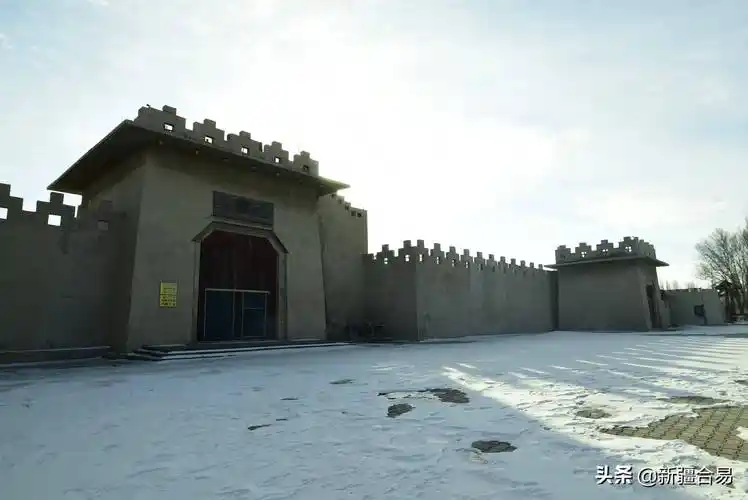
The Wulumuqi Ancient City Ruins, located at the foot of the Tian Shan Mountains, was a vital military stronghold under the Anxi Protectorate during the Tang Dynasty. The remaining city walls and beacon towers tell the story of a thousand years of the Silk Road. The ruins’ surviving city walls reach 5 to 8 meters in height, with rammed earth layers faintly visible with cord-marked pottery shards and arrowheads. Three large rammed earth platforms are found within the city, believed to be the remains of government offices and Buddhist temples. Scattered fragments of broken porcelain and coins witness the exchanges between East and West merchants. Walking among the broken walls allows you to touch the construction of the Tang Dynasty guards’ city walls, and the remaining bricks of the beacon tower still exude the solemnity of defensive fortifications. An inscription in the Aramaic language, dating back to the 7th century, was unearthed in the northwest corner of the site, recording a trade agreement between Aramaic merchants and the Central Plains. The Buddhist stone cave group discovered in the suburbs confirms the flourishing convergence of diverse cultures. This strategic city, guarding the Tian Shan pass, was a forward outpost for the Tang army’s agricultural defense and a station for Aramaic and Persian trade caravans on the Silk Road. Guo Xin, a Tang Dynasty general, once commanded troops here, and Princess Wencheng passed through this place when she entered Tibet. The ruins are not only a military fortress but also a crossroads of Eastern and Western civilizations, with the rammed earth layers containing the echoes of camel bells and horse hooves, and each broken brick engraved with the secrets of Silk Road civilization.