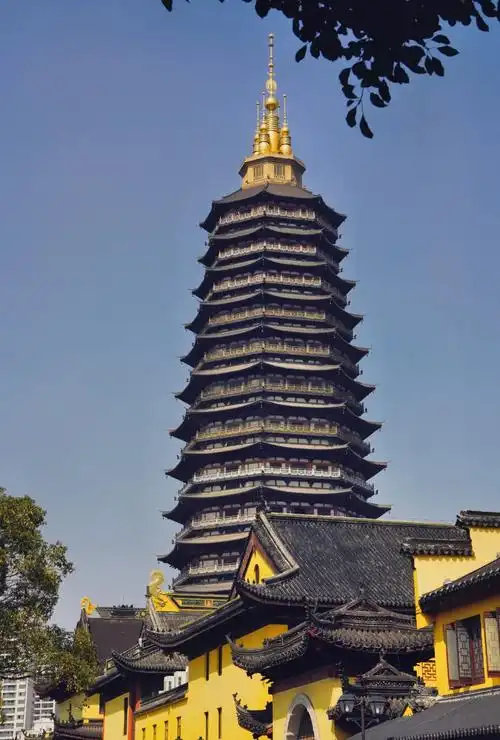
Tianning Temple was first established during the Eastern Jin dynasty. Having weathered a thousand years of wind and rain, it preserves today an exquisite Song-dynasty sutra pillar and a Ming-dynasty bell tower, making it a treasured gem among Taizhou’s historical sites. Ancient trees tower overhead, while time flows quietly through the grey bricks and dark-tiled roofs. The resonant morning bell and evening drum, accompanied by the lingering chants of Buddhist sutras, freeze time into a living, flowing scroll.
The Song-dynasty sutra pillar is masterfully carved, its relief sculptures of Buddhas vivid and lifelike, bearing witness to the spread of Buddhist culture across the Jianghuai region. The Ming-dynasty bell tower soars skyward; its bronze bell once rang so powerfully that it served as Taizhou’s official timekeeper during the Ming and Qing dynasties. The main hall, Daxiong Baodian, features upturned eaves and brilliantly painted decorations. Inside stands a solemn yet compassionate Thousand-Armed and Thousand-Eyed Guanyin statue, inspiring reverence in all who behold it. The scripture library houses precious ancient texts, and stone steles stand densely throughout the grounds—among them, a particularly prized treasure: a stele inscribed with “Tianning Chan Temple” in the vigorous, powerful brushstrokes of Zheng Banqiao, the renowned Qing-dynasty painter and calligrapher.
More than just a sacred religious site, this millennium-old temple is a living fossil of Taizhou’s history. The eminent Eastern Jin monk Faxian once translated scriptures here, and the Tang-dynasty poet Wei Yingwu left behind verses praising it: “Ten thousand layers of cloud-shrouded mountains, pine and cypress standing for millennia.” Legend has it that the temple’s ancient well, “Longhong Spring,” can reflect the innermost heart of those who gaze into it. A ginkgo tree over a thousand years old sways gently in the breeze, its rustling leaves seeming to recount past glories. Strolling through the temple grounds, one can immerse oneself in the profound depth of Chan Buddhism while simultaneously sensing the historical pulse of Taizhou—a city once vital to the Grand Canal. Every brick and tile whispers tales of time; every footstep echoes through a thousand years.