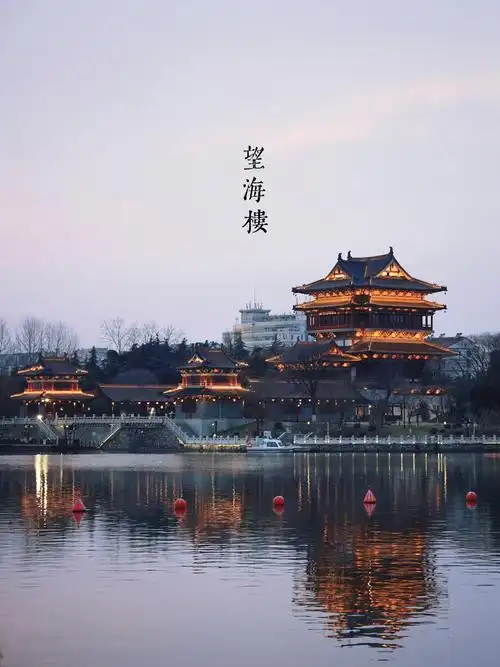
Wanghai Tower, located in the Hailing District of Taizhou, Jiangsu Province, is a remarkable example of traditional Chinese architectural design and historical preservation. Originally built during the Tang Dynasty (618–907 AD), the tower has undergone several reconstructions over the centuries, with its current structure dating back to the Qing Dynasty. Standing at an impressive height, it offers breathtaking 360-degree views of the Yangtze River delta, nearby wetlands, and the urban skyline. The tower's multi-tiered pavilion style, adorned with intricate carvings and red columns, reflects the aesthetic values of classical Chinese culture. Historically, Wanghai Tower served as a watchtower for maritime navigation and a symbol of civic pride. Today, it functions as a cultural center, hosting exhibitions on local history, calligraphy, and folk art. Visitors are encouraged to explore the tower’s inner galleries, enjoy traditional tea ceremonies on the upper floors, and take guided tours that highlight its role in regional development. The surrounding park area features walking paths, ancient stone inscriptions, and seasonal flower displays, making it ideal for leisurely strolls or photography. Wanghai Tower not only embodies Taizhou’s rich heritage but also serves as a living testament to the enduring spirit of Chinese civilization.