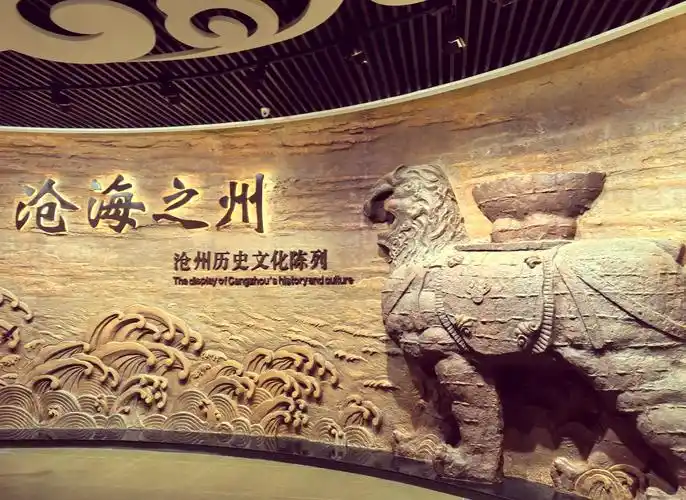
The Cangzhou Museum, located in Cangzhou City, Hebei Province, is a comprehensive museum that integrates humanistic history and regional culture. It houses over 20,000 cultural relics, with core collections centered on Grand Canal culture, bronze artifacts, and folk customs. Through immersive digital exhibitions and life-like reconstructions, the museum brings history vividly to life.
The Grand Canal Culture Hall uses sand tables and multimedia technology to recreate the millennia-long legacy of the Beijing-Hangzhou Grand Canal. The Bronze Gallery showcases ritual vessels from the Shang and Zhou dynasties, including exquisite jue wine vessels and ding cauldrons, testifying to the brilliance of ancient Chinese bronze civilization. Meanwhile, the Folk Customs Exhibition displays Cangzhou’s martial arts weapons, acrobatic props, and traditional handicrafts, highlighting the region’s unique cultural charm.
The Digital Exhibition Hall employs virtual reality technology, allowing visitors to “travel back in time” to a bustling canal port during the height of the grain transport era and experience the vibrant daily life of that period. The museum also features special thematic exhibits, such as a model of the Zhaozhou Bridge—designed by the Sui dynasty engineer Li Chun—and a reconstructed scene of the Cangzhou Prefectural Office where Ji Xiaolan, the renowned Qing dynasty scholar, once served.
Cangzhou has long been a strategic hub along the Grand Canal. Established as a commandery during the Han dynasty and later becoming a vital漕运 (grain transport) center in the Yuan dynasty, the city developed a rich, inclusive cultural heritage. Dong Zhongshu, the prominent Confucian scholar of the Western Han dynasty, once lectured here, while the prosperity of canal-based merchant guilds further transformed Cangzhou into a dynamic crossroads of northern and southern cultures. The artifacts within the museum not only bear witness to this layered history but also embody the cultural DNA of Cangzhou as a celebrated “City of the Grand Canal,” enabling every visitor to sense the profound humanistic legacy of this land through light, shadow, and object.