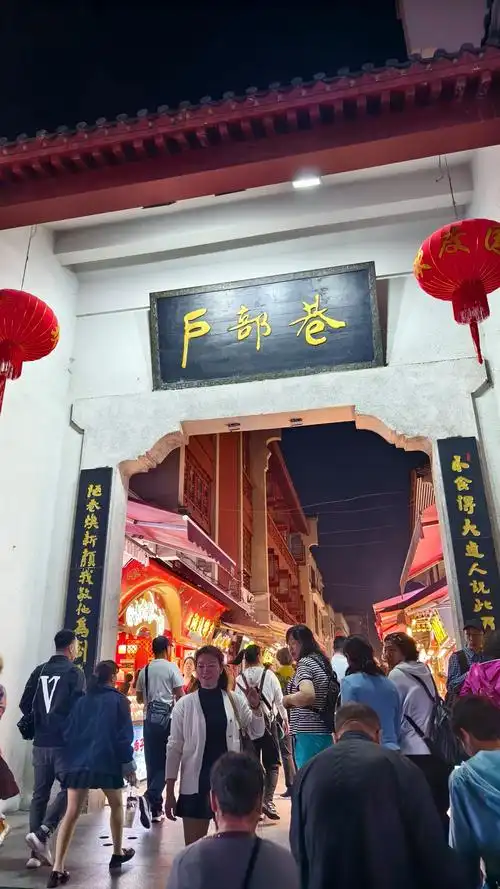
Wuhan’s Húbù Xiàng is the most authentic old street in Wuhan, a cultural landmark brimming with local charm. Brick and tile Ming and Qing Dynasty buildings are arranged in a harmonious manner, and the weathered brick walls still bear the old name of “Liujiaxiang,” telling of six hundred years of historical change. In the depths of the alleyways, the aroma of sesame paste from hot dry noodles blends with the fragrance of tofu skin, while the sweet aroma of steamed buns and crispy oil-filled rice rolls fill the air, evoking the nostalgia of Wuhan residents for their hometown. This is not only a food paradise, but also a living museum of Chu culture. At the corner shops, paper-cutting artisans practice a thousand-year-old non-heritage skill, and children at the tofu stalls are learning to mold Chu culture symbols. In the three-foot tea houses, Chu opera melodies are mellow and graceful, and old tea drinkers tell stories in authentic Wuhan dialect about “zao’ao” culture. At the entrance of the alley, the “Hanwei Xiao Chi Bowuguan” (Hanwei Snack Museum) displays dining utensils passed down from the Ming and Qing dynasties, witnessing the evolution of Chu cuisine.