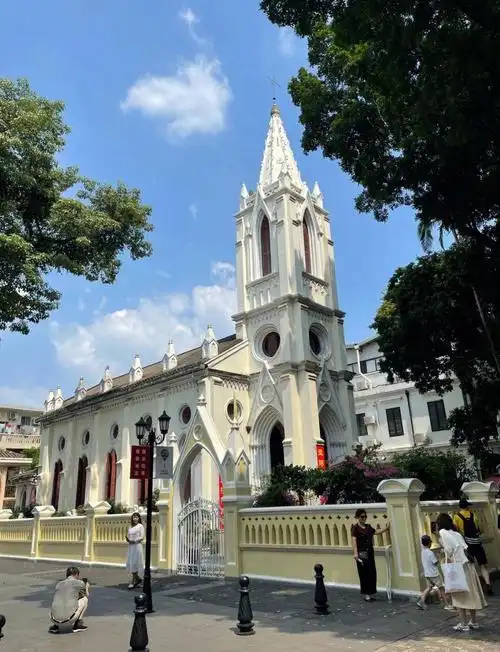
Shamian Island, a living fossil of Guangzhou's history, is a microcosm of the foreign concessions established from the late 19th to early 20th century. Over 200 European-style buildings still stand on the island, showcasing French colonnades, English spires, Spanish arches, and more. The weathered red-brick walls and intricate cast-iron decorations whisper tales of a bygone era’s exotic charm. Cobblestone paths wind like piano strings; stepping over moss-covered stones feels like traveling through time, with echoes of steamship whistles and church bells ringing in your ears.
Key attractions include the French architectural ensemble along Shamian Avenue, where arched windows and stained-glass panes cast dreamy halos in sunlight; the Sacred Heart Church—built by French missionaries—featuring a rose window and Gothic spire that testify to the sincere fusion of Chinese and Western cultures; and the Shamian Museum, which displays antique cannons, stamps, and daily artifacts from the concession period, vividly recreating the lively atmosphere of old urban life. In quiet alleyways, under century-old banyan trees entwined with vines, elders often recount legendary tales of the "Thirteen Hongs" merchant guilds and their dealings with foreign traders.
Once dubbed the "Wall Street of the East," this area serves as a living archive of Guangzhou’s modern history. After the port opened in 1860, countries including Britain, France, the United States, and Germany established concessions here, filling the island with consulates, banks, and foreign trading houses, making it the hub of South China’s foreign trade. Today, ornate iron gates and cast-iron railings still cling to the weathered walls—each crack etched with the imprint of its time. Strolling through Shamian, one can not only appreciate the architectural aesthetics of the colonial era but also touch the legacy of Guangzhou as a maritime gateway.