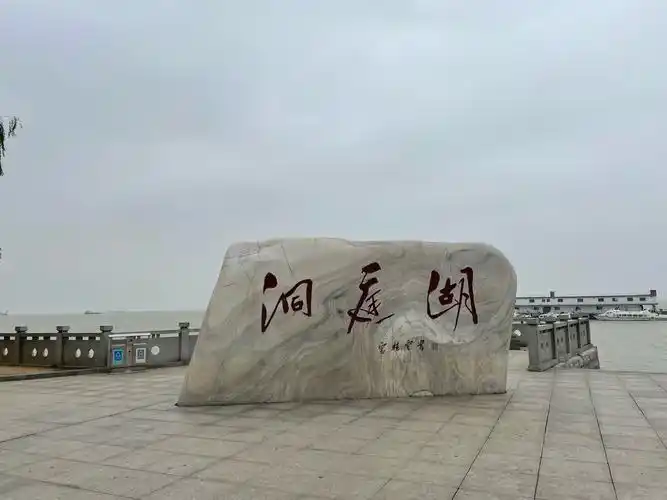
Dongting Lake, China's second-largest freshwater lake, lies in Yueyang City, Hunan Province, and is renowned worldwide as the "Eight-Hundred-Li Dongting." Its vast expanse shimmers with misty waves, offering ever-changing scenery across the four seasons: emerald ripples dance upon spring’s first waters, while golden light glitters across the lake under autumn’s clear skies. The melodious chants of fishermen returning at dusk harmonize perfectly with the interplay of lake and mountain vistas, evoking the grandeur described by Meng Haoran: “Vapors rise from Yunmeng Marsh; waves shake the city of Yueyang.”
Within the core scenic area, Junshan Island floats like a jade gem upon the water, adorned with ginkgo trees and azaleas that complement the resonant chimes of its ancient temples. Overlooking the lake stands the Yueyang Pavilion, where Fan Zhongyan—a Northern Song dynasty statesman—penned his famed "Record of the Yueyang Pavilion," etching into history his ideal of “worrying before anyone else worries.” Spanning east and west, the Dongting Lake Bridge showcases a striking fusion of modern engineering and natural beauty. Additional attractions such as the Milu Deer Reserve along the Peach Blossom River and Junshan Island’s “Great Wall on Water” each offer their own unique charm.
Long celebrated as a “land of fish and rice,” Dongting Lake has served as a wellspring of inspiration for poets and scholars throughout Chinese history. Qu Yuan, the Warring States-era poet, was exiled here and composed his masterpiece "Li Sao" (The Lament). Li Bai, the Tang dynasty poet, sailed these waters and left behind verses praising its beauty as “equally enchanting in light or heavy makeup.” Fan Zhongyan and Ouyang Xiu—the latter a literary giant of the Northern Song—transformed the Yueyang Pavilion into a stage where love for country and nature merged seamlessly in lyrical poetry. Legends further enrich the lake’s cultural depth: the spotted bamboo said to be stained by the tears of the Xiang River goddesses, and the myth of Jingwei tirelessly filling the sea, imbue these waters with mystery and profound meaning. Today, Dongting Lake remains not only a natural ecological treasure but also a living museum where Chinese civilization and the spirit of Hunan converge.