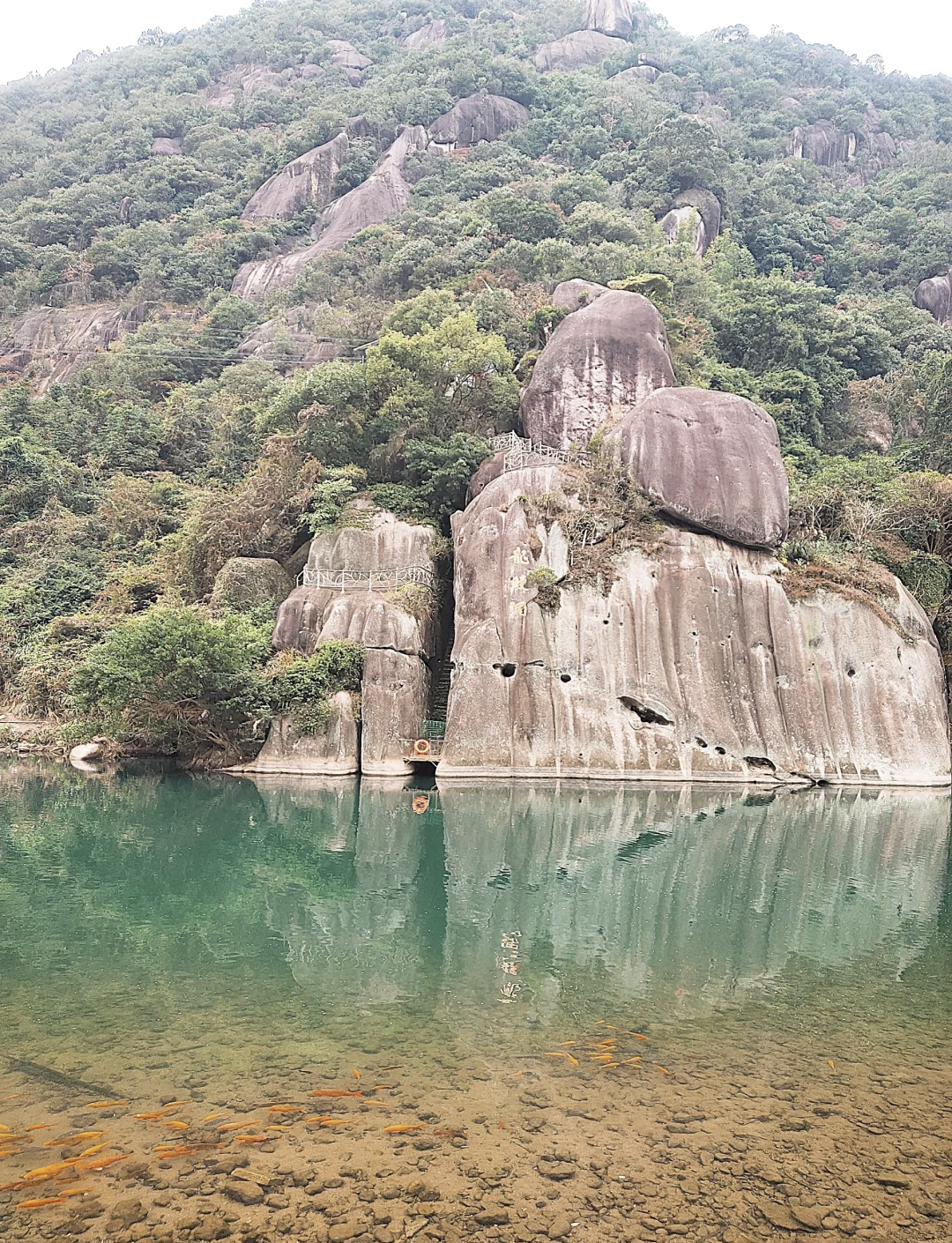
Xiapu’s Yangjia Creek is located in Xiapu County, Ningde City, and stands as a rare scenic gem in eastern Fujian that seamlessly blends natural beauty with profound cultural heritage. The creek winds like a jade-green ribbon, flanked by ancient banyan trees whose sprawling canopies cast umbrella-like shade. Crystal-clear waters reflect the steep cliffs on both banks, creating a landscape reminiscent of an ink-wash painting.
Along the creek stand banyan trees over 300 years old—majestic giants with cloud-like crowns and intricately twisted roots, revered by locals as “living fossils.”
The scenic area centers around three key components: the Ancient Banyan Grove, the historic Yangjia Creek Ferry Crossing, and a cluster of cliffside inscriptions. Once a vital trade route linking Fujian and Zhejiang provinces, the old ferry retains its Ming- and Qing-era stone steps and wharf paved with bluestone slabs etched deeply by time. Scattered across the rocky slopes beside the creek, the cliff inscriptions include the powerful calligraphy “Yangxi Mist and Rain” by Shen Baozhen—a Qing-dynasty official—and the elegant characters “Qingxi Fishermen’s Song,” attributed to Wen Tianxiang, the famed Southern Song general who resisted the Yuan dynasty. In spring, camellias bloom along the banks like rosy clouds; in autumn, forests blaze in fiery hues—each season offering its own unique spectacle.
Yangjia Creek derives its name from descendants of the legendary “Yang Family Generals” who settled here. During the Ming and Qing dynasties, it served as a crucial hub for cultural exchange in eastern Fujian. Local fishermen still preserve the tradition of “call-and-response fisherman’s songs,” their melodies carrying the briny tang of sea breezes and the crisp purity of mountain springs. Nearby, clusters of well-preserved Ming- and Qing-style dwellings showcase intricate carved beams and painted rafters, echoing vivid memories of Min Dong folk customs. More than just a natural wonder, this landscape embodies a confluence of history and culture—inviting visitors to pause, reflect, and read the rings of time itself.