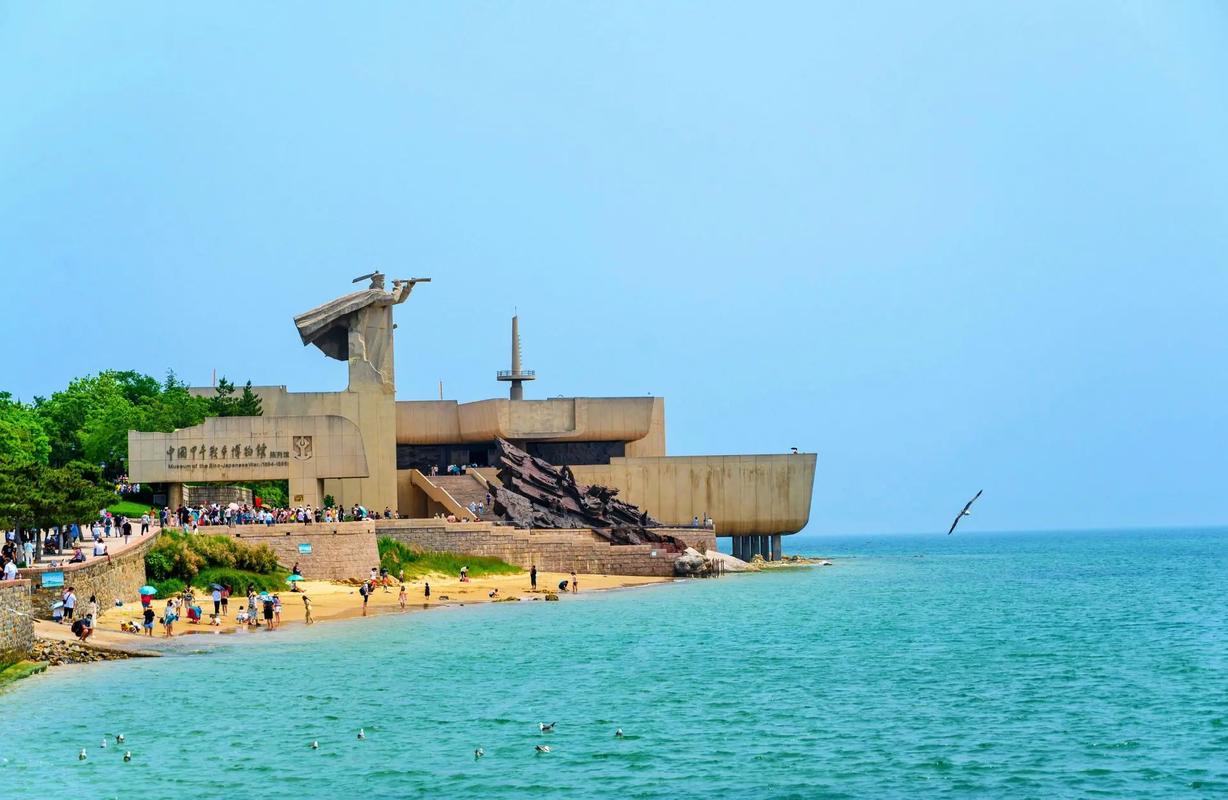
Liu Gong Island, like an emerald embedded in Weihai Bay, embodies the epic of changing seas and lands. The island’s sea breeze gently caresses the reefs, while verdant mountains and shimmering seas reflect each other, with the Half Moon Bay’s curved coastline being particularly stunning. The ebb and flow of the tides seem to whisper tales of ancient fishermen’s songs. The island houses the Sino-Japanese War Museum, with a collection of over 200 artifacts, including the correspondence of Ding Ruhang (Inspector of the North Sea Fleet) and the relics of Deng Shichang (Commander of the Zhiyuan Ship), witnessing the 1894 naval battle that changed China’s destiny. The Dong Hong Fort, a key node in the North Sea Fleet’s defense system, still retains its gun positions and defensive structures, allowing visitors to glimpse the intensity of the battles. The tragic story of Lin Yongshing (Commander of the Zhiyuan Ship) who died heroically is deeply moving. The Liu Gong Island Lighthouse stands atop the cliff, guiding ships for centuries, and its cast iron lantern still shines with the light of history. This is not only a paradise of natural scenery, but also a living fossil of modern China’s coastal defense history, with every inch of land engraved with the imprint of national awakening, allowing visitors to touch the temperature of history between mountains and waters.