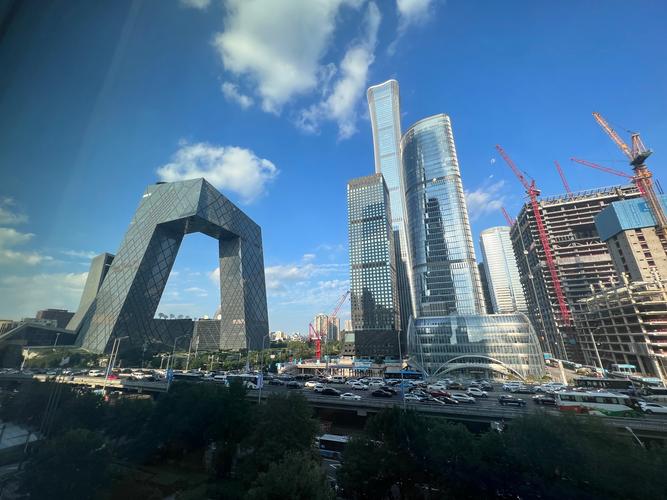
Located in the heart of Taiyuan, the China World Trade Center exemplifies the seamless fusion of Jin merchant culture and modern commerce. It not only houses international luxury brands and premium local department stores but also features an underground food street offering a culinary feast that blends authentic Jin cuisine with global flavors—creating a unique duality of “luxury above ground, vibrant烟火 below.”
The building’s exterior draws inspiration from traditional Jin merchant courtyards, featuring gray-tiled roofs and white walls. Inside, the atrium soars upward with intricately carved wooden beams reminiscent of antique craftsmanship, which—juxtaposed against glass curtain walls and LED lighting—imbues heritage elements with contemporary vitality.
The centerpiece is the “Jin Merchant Culture Corridor,” where holographic projections vividly recount the legendary business saga of Qiao Zhiyong, a renowned Jin merchant who founded the Dashengkui piaohao (a historic Chinese banking institution). Visitors can interact with replica silver notes to experience the ingenuity of Jin merchants firsthand. The three-level underground food street brings together time-honored Shanxi eateries and international culinary delights—from hand-cut noodles to Spanish paella—each stall serving as a window into cross-cultural exchange.
On the top floor, the “Jin Merchant Study” displays original manuscripts by Qu Jinshan, founder of a prominent Jin piaohao, alongside meticulously reproduced Qing-dynasty ledgers and commercial contracts, all illustrating the Jin merchant philosophy of “integrity as the foundation of business.”
As a landmark of urban renewal in Taiyuan, the China World Trade Center revitalizes the Jin merchant ethos of “pursuing profit through righteousness” within a modern retail context. Strolling through its spaces, visitors encounter both the futuristic allure of global fashion and the profound cultural legacy of Jin merchants—a dialogue between past and present in the realm of commercial civilization.