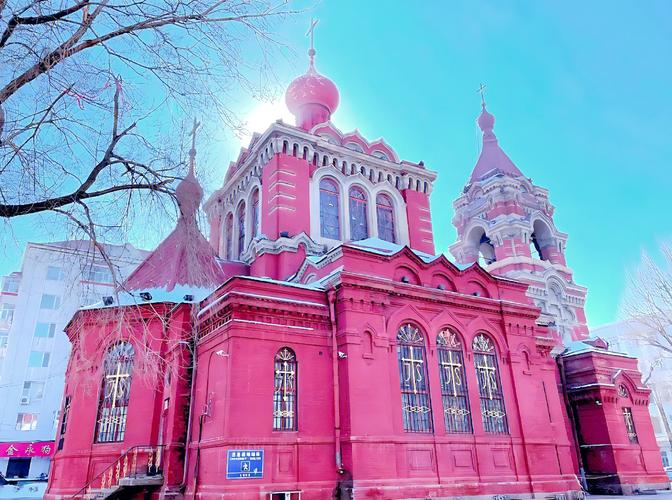
Gogol Street is a poetic corridor of Sino-Russian cultural fusion, with weathered Russian architectural groups stretching for several miles along the Songhua River, telling stories of the colonial memories of the era of the Russian Empire through mottled sculptures and painted windows. The streets and alleys are filled with the scents of coffee and books, and numerous literary cafes have become inspiration stations for writers and artists. The wooden staircases echo with poetry recitations and impromptu dramas. Walking through it, the onion domes of St. Sophia’s Cathedral shimmer with golden light in the twilight, the red brick walls of the Mai’erli Hotel on Central Street are weathered and old, and the Gogol statue holds a book in its hand, gazing at the street scene, seemingly witnessing the timeless connection between the writer and Harbin a century ago. The Russian apartments in the corner were once the refuge of Ba Jin and Xiao Hong, and the traces of the era remain in the cracks in the walls. This street carries the glory and vicissitudes of Harbin as “Little Paris of the East,” and the collision of Sino-Russian architectural styles reaches its peak here. Every brick and every alley flows with the blood of literature, becoming the spiritual homeland of literary youth. When the twilight dyes the surface of the Songhua River red, Gogol Street transforms into an eternal literary theater, staging eternal narratives about time, memory, and beauty.