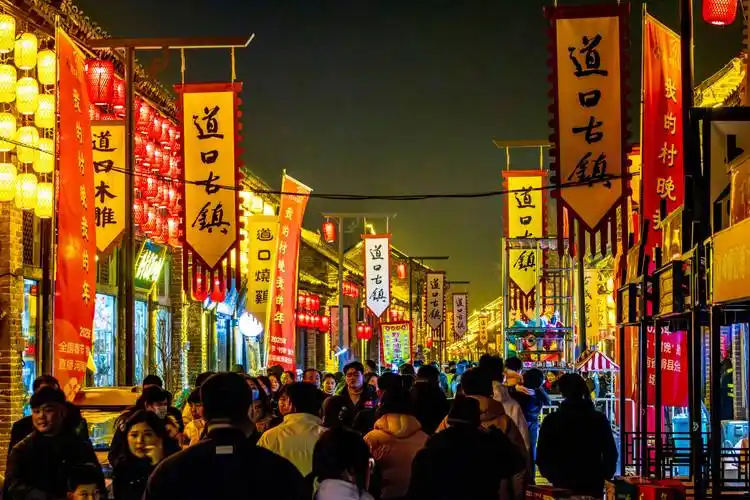
Harbin’s Lao Dao Jie is a winding, century-old Russian-style streetscape, the most vibrant cultural memory of the Ice-Snow Wonderland. A group of baroque-style domed churches and red brick arcades shimmer together, like a frozen fairytale world. At the corner, sugar painting artisans use copper spoons to sketch flying dragons and phoenixes, while paper-cutting artists create intricate window flower patterns. These non-material cultural heritage skills flourish in the steam-filled atmosphere, showcasing a thousand-year craftsman’s spirit. Entering the alleyways, the golden dome of St. Sophia’s Cathedral envelops the mottled stone steps, and the warm yellow light from the painted windows of Russian wooden houses seeps through. The old-fashioned electric cars chime as they pass over the streets covered in fallen ginkgo leaves. As night falls, the entire street is outlined with warm-toned light strips, and the Russian architectural group is recreated in the light and shadow, as if traveling with the Russian merchants of the 19th century to admire ice lanterns. This street carries Harbin’s special memory as a central railway hub, and the Russian architectural group rose with the railway construction in 1903, becoming a witness to the fusion of Eastern and Western civilizations. The existing Russian buildings in the district are mostly remnants from the late 19th and early 20th centuries, and their arched doorways and carved decorations embody the skills of the Russian craftsmen. Lao Dao Jie is not only an architectural museum but also a living carrier of Sino-Russian cultural exchange, allowing visitors to touch the temperature of history through the sweet scent of sugar paintings.