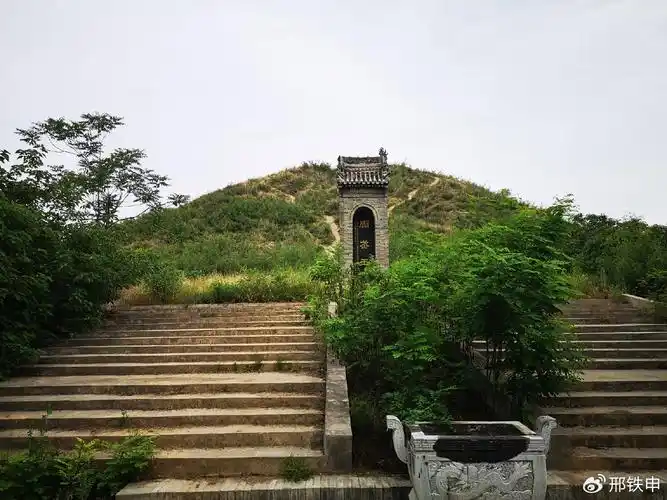
Zhouling Scenic Area lies on the Xianyang Plateau and serves as the final resting place of twelve sovereigns of the Western Zhou Dynasty. Amid the gullies of the Loess Plateau, towering cypresses and pines stand like sentinels—ancient, majestic trees with gnarled trunks forming a natural "Great Wall" of greenery. At the heart of the site is the "Ancient Cypress Grove of Zhouling," home to 87 surviving ancient cypresses. Among them, the famed "Zhouling Cypress" in the tomb complex of King Mu of Zhou (the fifth ruler of the Western Zhou) is over 3,000 years old. Its canopy spreads like an umbrella, its trunk so massive it takes several people to encircle it, and its bark, deeply fissured, resembles the inscriptions on oracle bones—bearing silent witness to eight centuries of Zhou dynasty history.
Scattered throughout the area are imperial tombs of multiple Zhou kings, including King Wen (founder of the Western Zhou), King Wu (the second ruler), and King Cheng (the third ruler). Their burial mounds rise in distinctive truncated pyramidal shapes, creating a striking contrast against the surrounding ravines. In spring, the loess earth turns faintly green, and fresh cypress shoots shimmer like jade; in late autumn, forests blaze in golden hues interwoven with deep evergreen, echoing the rhythms of Zhou-era ritual music across the land.
More than just royal tombs, Zhouling embodies the spiritual symbol of Zhou ritual culture. The layout of the tombs follows the principle of "harmony between heaven and humanity," aligned along a north-south axis and adapted to the natural contours of the terrain, reflecting the Zhou dynasty's ancestral veneration and reverence for Heaven. Each ancient cypress within the grove bears engraved inscriptions, and inside their hollows lie carvings left by literati through the ages—including the Ming dynasty calligrapher Dong Qichang’s famous inscription “Cypress Embracing Zhouling,” which has coexisted and flourished alongside these millennia-old trees.
Here, history slumbers while nature composes an epic poem—a dialogue between yellow earth and green pines, narrating the enduring roots and timeless spirit of Chinese civilization.