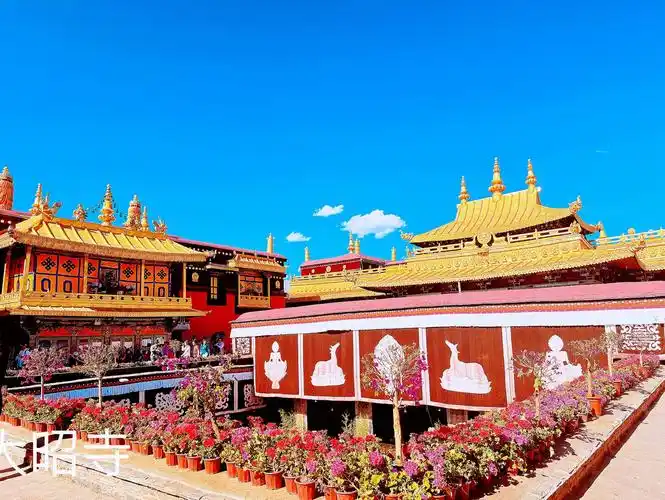
Da Zhao Temple in Hohhot is a significant Gompa of the Gelug school of Tibetan Buddhism, founded in 1580, and is one of the most representative religious and cultural sites on the Mongolian grasslands. The temple complex follows the contours of the mountain, blending Han and Tibetan styles, with shimmering golden glazed tiles reflecting the fluttering five-colored prayer flags between the halls, creating a solemn and sacred atmosphere that exudes spirituality. Before the Hall of the Heavenly Kings, majestic white jade lions stand powerfully, while the 15-meter-high copper statue of Kongpa in the main hall, adorned with over 2000 pieces of silver, with eyes like flames, inspires awe and respect. The murals depicting the “Life of Shakyamuni” are painted with mineral pigments, with the figures’ robes flowing as if traversing a thousand years. As the site of practice for the 13th Dalai Lama, Awang Rotsangjiaju, the temple houses the precious “Jamglul” scrolls and the Ming Dynasty gilded mandala, witnessing the profound cultural fusion of Mongolia and Tibet. The Kangxi Emperor bestowed the plaque “Shannian Temple” on his own hand, and the imperial inscription “Guzejianbing” written by the young emperor, Fengye, still stands in the stele pavilion. Every 18th day of the fourth month of the lunar calendar, the “Prayer Festival” held within the temple attracts Mongolian and Han ethnic believers, with the butter lamps burning eternally, and the chanting of scriptures interwoven with the melodies of the Morin Khuur (horsehead fiddle), playing the eternal music of Mongolian faith. This is not only a religious site but also a historical witness to the coexistence and integration of China’s diverse cultures.