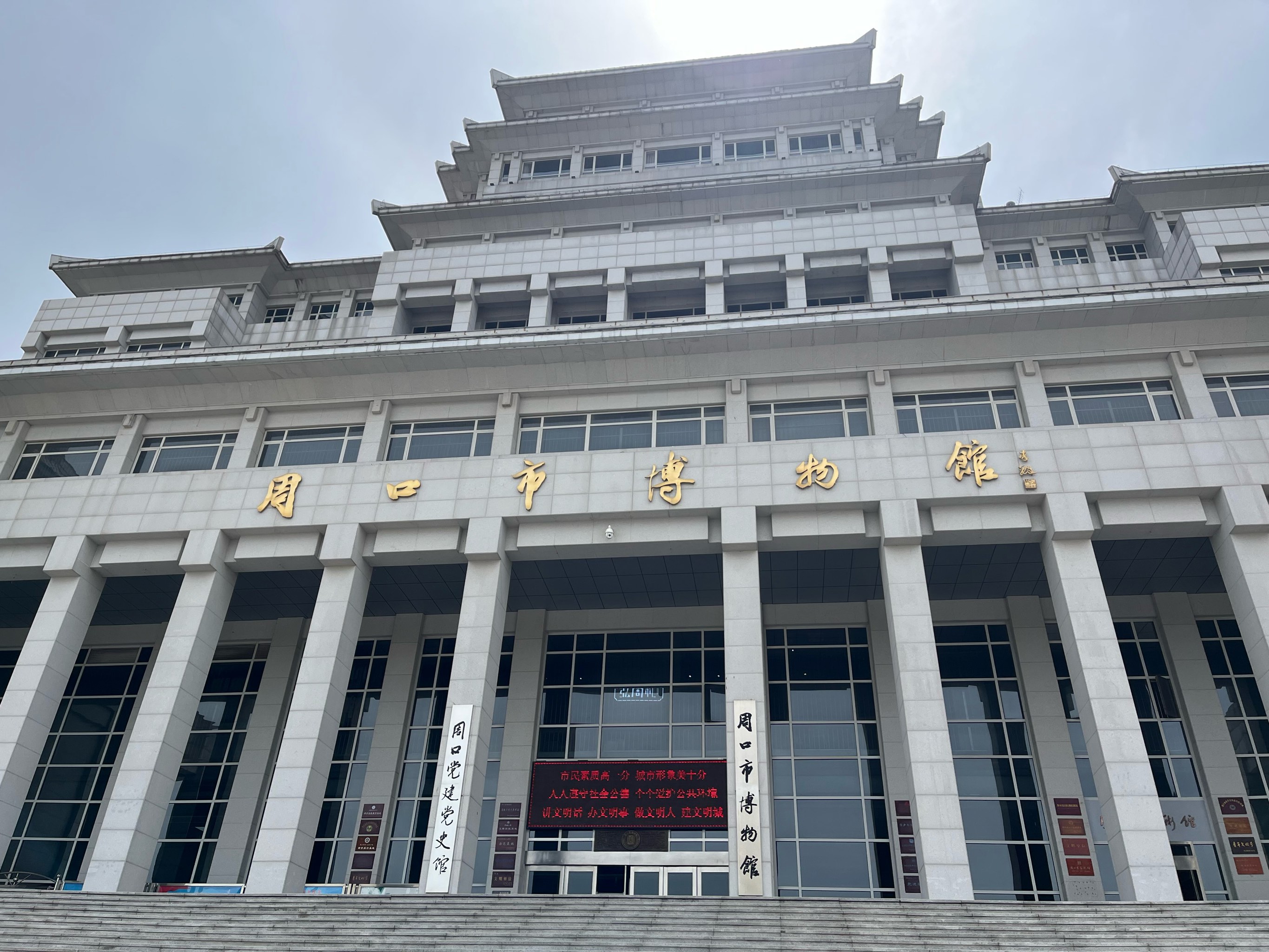
Zhoukou Museum, located in the heart of the Huang-Huai Plain, positions itself as a "living fossil of Central Plains civilization." Its collection comprises over 10,000 cultural relics spanning from the Shang and Zhou dynasties through the Ming and Qing periods, with its most outstanding treasures concentrated in three major categories: bronzes, ceramics, and calligraphy and painting.
In the bronze exhibition hall, the Shang-dynasty square ding (ritual cauldron) adorned with zoomorphic masks and the Western Zhou jue (ritual wine vessel) decorated with taotie motifs gleam softly under the lighting, their inscriptions bearing witness to the ancient inhabitants of Zhoukou’s reverence for heaven and earth. In the ceramics section, a Song-dynasty Ru ware vase with sky-blue glaze and string-pattern decoration and a Jun ware plate showcasing dramatic kiln-transmutation glazes shimmer like congealed jade, testifying to the legendary ceramic craftsmanship that flourished along the Grand Canal.
Within the calligraphy and painting gallery, Wen Zhengming’s (a master of the Wu School during the Ming dynasty) handscroll “Eight Views of Zhoukou” evokes the misty, rain-drenched scenery of the ancient Yellow River course through delicate ink washes. Nearby, Zheng Banqiao’s (a renowned Qing-dynasty artist) hanging scroll “Bamboo and Rocks” bears his famous inscription “It is hard to be muddled”—a phrase reflecting his philosophical wit, which resonates strikingly with the resilient spirit of the people living in the flood-prone Yellow River region.
The museum’s “Grand Canal Cultural Corridor” vividly recreates scenes of historic canal transport wharves, illustrating Zhoukou’s former prosperity as a vital hub connecting water and land trade routes. A group of Han-dynasty pottery figurines includes a lively kitchen servant holding cooking utensils, while unearthed bamboo slips of the “Yantie Lun” (Discourses on Salt and Iron) together sketch the economic landscape of state-controlled salt and iron production during the Han era. Additionally, the museum preserves a Ming-dynasty edition of the “Zhoukou County Annals,” which records the city’s golden age when “merchants gathered in throngs and sails crowded the river like woven fabric.”
More than merely a display venue for artifacts, Zhoukou Museum stands as a spiritual symbol of Huang-Huai culture—each exhibit narrating the enduring legacy and vibrant continuity of Central Plains civilization.