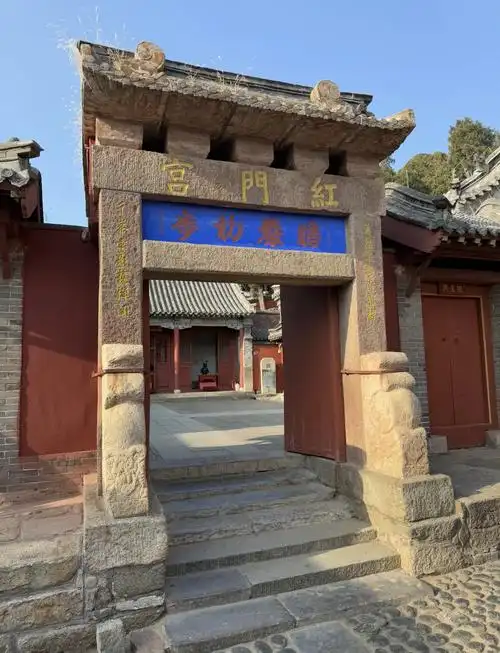
Red Gate Palace (Hong Men Gong), located at the base of Mount Tai in Shandong Province, China, is one of the most revered historical and religious sites along the mountain’s main pilgrimage route. Dating back over 1,000 years, it was originally built during the Tang Dynasty to honor the deities associated with Mount Tai, which has long been considered a sacred mountain in Chinese culture—symbolizing heaven, stability, and imperial power. The palace features traditional Chinese architectural elements such as red walls, curved roofs, and intricate wood carvings, reflecting both aesthetic beauty and spiritual symbolism. Visitors often begin their ascent from here, making it a symbolic threshold between the earthly realm and the divine. The site is also linked to Confucian, Daoist, and Buddhist traditions, as Mount Tai has historically hosted rituals, imperial ceremonies, and scholarly pilgrimages. For tourists, it’s recommended to visit early in the morning to experience the serene atmosphere and witness locals performing rituals or offering prayers. Red Gate Palace not only embodies centuries of cultural heritage but also serves as a living testament to China’s enduring reverence for nature, spirituality, and ancestral wisdom.