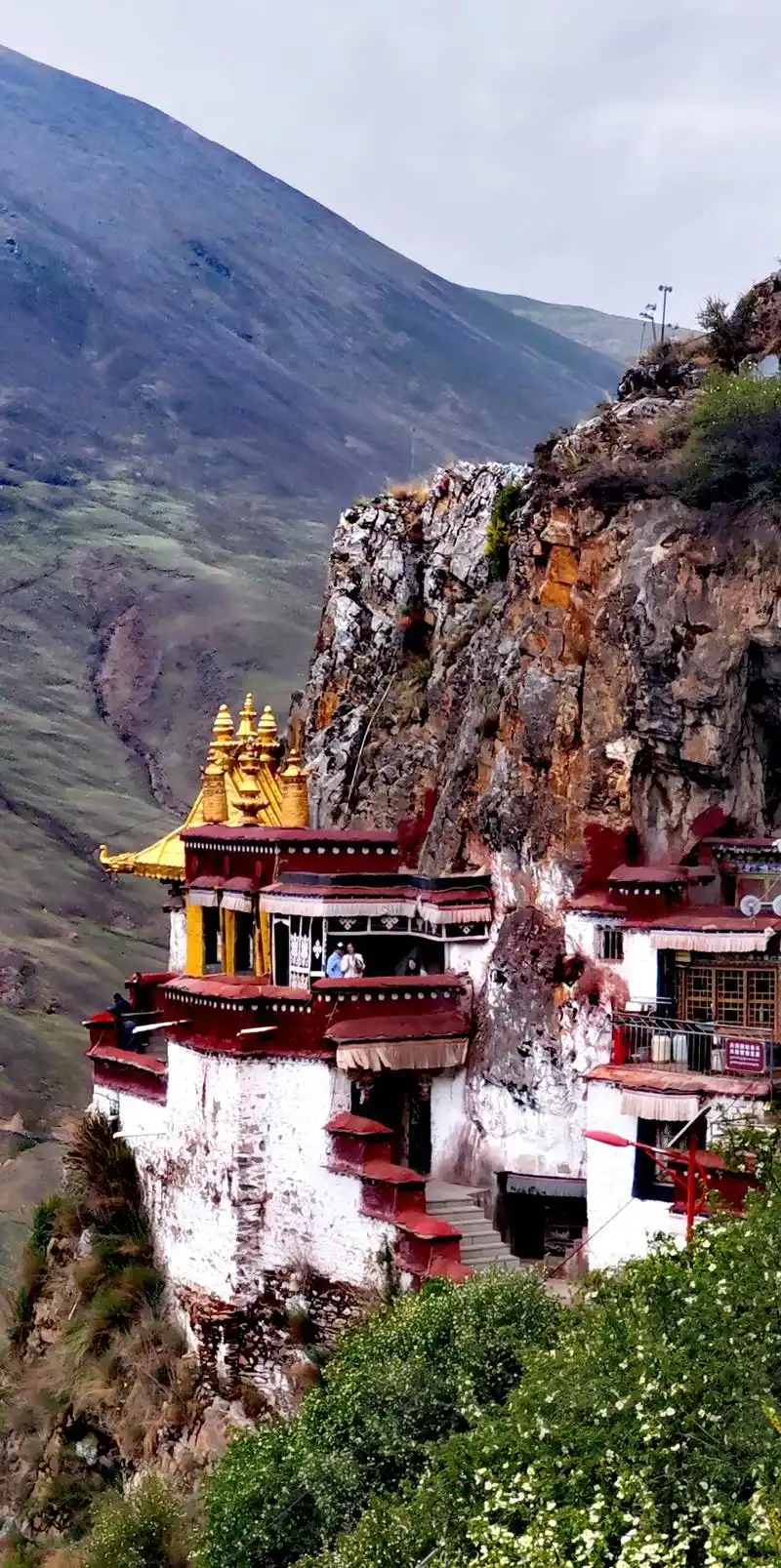
Zayepa Temple is located amidst the high-altitude gorges of Linzhi, a cliffside monastery built into the mountains. The main path, a rotating prayer wheel, is over three kilometers long, with winding stone steps resembling dragons and snakes, where monks and pilgrims have walked for a thousand years, engraving their faith into every indentation. Behind the red-lacquered wooden doors, the main hall’s dome features intricate mandala murals, the gold powder and mineral pigments becoming increasingly brilliant over time, showcasing the mysteries of Tibetan Buddhism’s esoteric cosmology. Remnants of prayer flags and horse banners on the cliff walls flutter in the wind, telling of ancient wisdom coexisting with nature. The temple houses caves where successive high monks practiced meditation, and “Silent Cave” was once the retreat of the Sakya school’s master Kun Goerpa Zangpo (11th century Tibetan Buddhist high monk). Scattered pottery and religious artifacts from the monk’s residences witness this place as a significant religious center during the period of the Tibetan Empire. The “Tiger Cave” cave beside the rotating prayer wheel is said to be where Milarepa (8th century Tibetan Buddhist founder) practiced, and the inscriptions within the cave are still clearly visible. This ancient temple, built in the 8th century, blends Indian Buddhism with Tibetan tradition, serving as a living fossil of Tibetan Buddhist art. At dawn and dusk, prayer flags flutter in the wind like butterflies, transforming thousand-year-old chants into echoes in the mountains, allowing every visitor to feel the eternal dialogue between faith and nature.