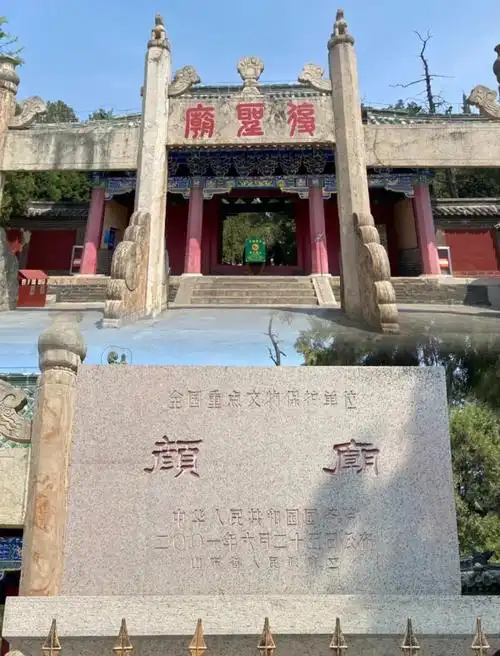
The Yan Temple is located east of the Confucius Temple in Qufu and was built as a sacred site to honor Yan Hui, Confucius’s most esteemed disciple. Its solemn and reverent atmosphere resonates profoundly with the spirit of Confucian culture. The existing architectural complex within the temple is arranged symmetrically along a central axis, featuring majestic halls and ancient cypress trees with lush, deep-green foliage. Particularly striking are the seven thousand-year-old cypress trees standing before the Yan Zi Shrine—their gnarled branches twist like dragons, and their mottled bark resembles ancient scrolls, silently bearing witness to over a millennium of Confucian heritage.
The core area of the temple comprises the Offering Hall, the Rear Hall, and the Stele Corridor. Inside the Offering Hall stands a statue of Yan Hui, while the side walls are adorned with vivid bas-reliefs illustrating the essence of Confucius’s teaching: “Benevolence means loving others.” The Stele Corridor houses more than thirty stone steles dating from the Han to the Qing dynasties, recording Yan Hui’s life and commentaries on Confucian classics. Among these, the inscription “Yan Hui Ode” by the Northern Song dynasty literary giant Ouyang Xiu stands out for its powerful calligraphy and is considered a rare treasure. The temple also preserves a fragmentary copy of the Ming dynasty version of the *Yan Family Instructions*, showcasing the Yan family’s dedication to practicing Confucian values.
As Confucius’s most accomplished disciple, Yan Hui was posthumously honored as the “Second Sage” for his unwavering commitment to his ideals. His exemplary virtue profoundly shaped the development of Confucianism. The Yan Temple serves not only as a living museum for studying the culture of Confucius’s disciples but also as a profound symbol of Chinese civilization’s enduring reverence for the virtues of benevolence and moral integrity.