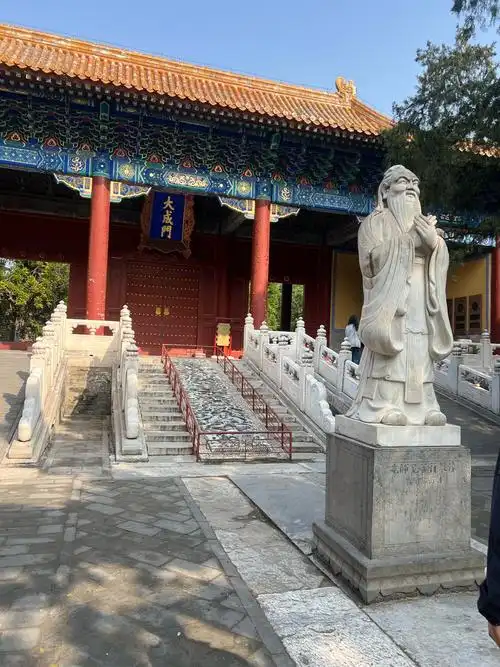
The Kong Family Mansion, located north of Qufu city, was the hereditary residence of the eldest descendants of Confucius. Covering a vast area with a meticulously arranged layout, it is hailed as a "living fossil of Eastern architectural art." The gatehouse, adorned with red walls and yellow-glazed tiles, features intricately carved beams and painted rafters; above its entrance, the four bold characters "Hometown of the Sage" powerfully convey the solemn dignity of Confucian ritual propriety. Inside, nine successive courtyards unfold in layered progression, with halls, corridors, and verandas arranged harmoniously. The mansion houses over ten thousand precious cultural relics, including a fragmentary Song-dynasty manuscript of the *Kongzi Jiayu* (Family Sayings of Confucius) and a Ming-dynasty imperial jade seal, testifying to millennia of cultural continuity.
Key attractions include the Grand Hall, Mingshan Hall, and the Library Building. The library preserves a handwritten copy of the *Siku Quanshu* (Complete Library of the Four Treasuries), and its wooden bookshelves have remained remarkably intact for centuries. At the entrance to the Kong Family Cemetery (Kong Lin), the stele inscribed with "Forest of the Most Venerable Sage" chronicles the migration history of Confucius’s descendants. Particularly noteworthy is the Kong Family Archives, which holds 150,000 historical documents from the Ming and Qing dynasties, offering detailed records of how the Duke Yansheng managed official affairs.
As the ancestral home of Confucius’s lineage, the mansion has been passed down through thirty generations of Dukes Yansheng. During the Qing dynasty, official Kong Chuiyi oversaw major renovations, while in the Republican era, politician Kong Xiangxi actively promoted the preservation of the mansion’s cultural heritage. More than just a snapshot of ancient aristocratic life, the Kong Family Mansion stands as a vital vessel of Confucian culture, its principle of "governing the household through ritual propriety" profoundly shaping East Asian civilization. Strolling through its courtyards feels like stepping across time, allowing one to touch the very pulse of Chinese civilization.