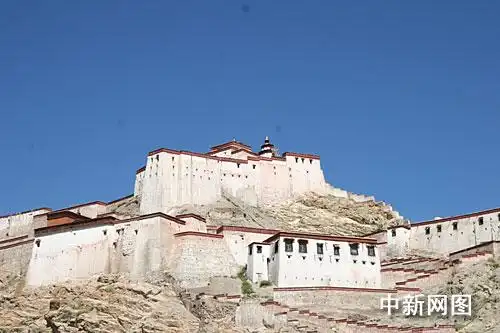
Shigatse Old Town is a living museum of Tibetan culture. Its cluster of bluish-gray stone watchtowers nestles against the mountainside, their upturned eaves and interlocking brackets echoing millennia of history. The Barkhor Street pilgrimage circuit winds like a golden ribbon, linking the devout prostrations of pilgrims with the drifting aroma of butter tea from bustling alleyways. Amid the gentle chime of prayer wheels, one can hear legends of Songtsen Gampo—the Tibetan emperor—welcoming Princess Wencheng of the Tang Dynasty, and sense the meditative serenity cultivated by generations of living Buddhas.
The gilded roofs of Tashilhunpo Monastery shimmer faintly through the clouds, while red-and-white prayer flags snap crisply in the wind. Inside the halls, murals depict Guru Rinpoche—the founder of Tibetan Buddhism—subduing demons with heroic might. Before the Dragon God Temple in Zongjue Lukang Park, women in colorful skirts toss handfuls of tsampa into sacred niches, praying for favorable weather and bountiful harvests. Sunlight filters through intricately carved Tibetan wooden window lattices, scattering like flecks of gold onto mani stone piles, dancing together with fluttering prayer flags.
Once the political heart of the ancient Guge Kingdom and a vital chokepoint along the Tea-Horse Road, this city also witnessed history in 1951 when the 16th Dalai Lama, Tenzin Gyatso—a spiritual leader of Tibetan Buddhism—hosted a landmark meeting here following Tibet’s peaceful liberation. Along the pilgrimage path, devotees measure faith with their bodies and inscribe epics with every step, ensuring this ancient town remains an ever-burning beacon of civilization on the high plateau.