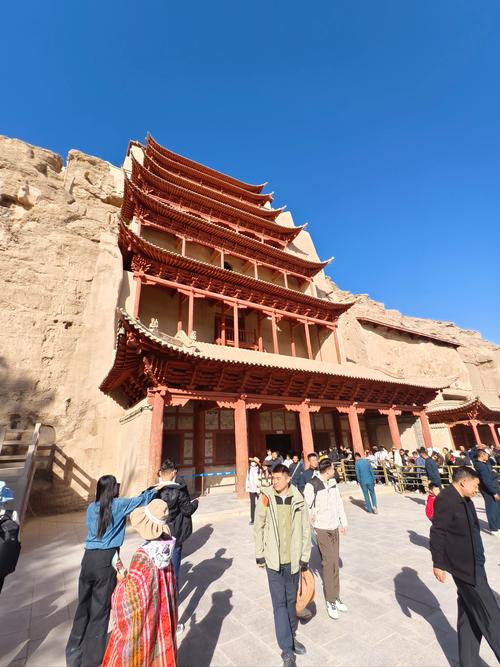
Mogao Grottoes, located beside the Singing Sand Mountain and Crescent Moon Spring in Dunhuang, is a brilliant gem of civilization on the Silk Road, renowned as “Thousand Buddha Caves.” With 735 existing caves, 45,000 square meters of murals, and over 2,100 sculptures spanning sixteen dynasties, it perfectly integrates Buddhist art with Chinese aesthetics. Built starting in the Northern Wei Dynasty, the grottoes were initially opened by the monk Le Jiong and later overseen by Tang Dynasty monks like Falyang. The discovery of the 50,000+ artifacts from the cave system triggered the “Dunhuang Disaster,” but ultimately brought treasures like the wooden print of the “Diamond Sutra” and the “Diamond Sutra” murals back to light. The discoverer, Wang Yuanzhen, inadvertently created a global academic feast. As a witness to the convergence of Western and Eastern civilizations, Mogao Grottoes fuses Indian Buddhist art, Central Plains traditional techniques, Persian Sassani style, and Greek-influenced artistic elements. Guardians like Chang Shunhong and Fan Jinshi have spent half a century restoring the murals, ensuring that the Buddha’s light shines eternally in the Gobi Desert. As the setting sun gilds Mogao Grottoes, these solidified beliefs and civilizations tell an epic tale of the human spirit.