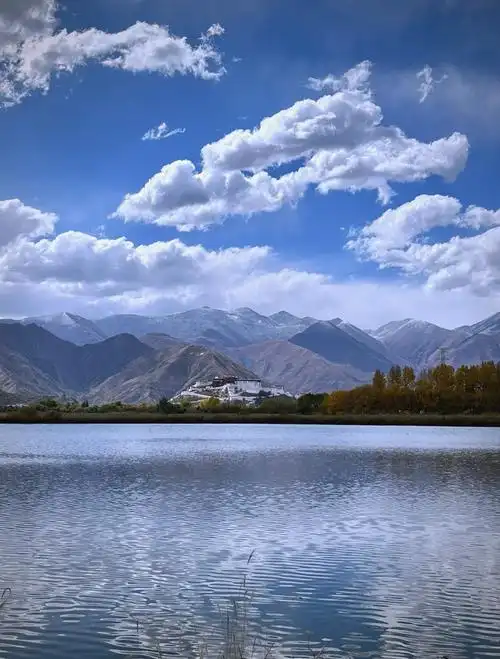
La Lu Marsh is a brilliant emerald gem in the outskirts of Lhasa, renowned as “Earth’s Kidney,” a rare urban wetland ecosystem on the Tibetan Plateau. It boasts abundant aquatic vegetation, wildflowers in spring, golden Gesang flowers shimmering with azure lakes, like a flowing painting. From April to October, tens of thousands of migratory birds arrive, with graceful arcs drawn by egrets and black-necked cranes, transforming the marsh into a symphony of life. The scenic area is divided into four main sections: wetland grassland, reed beds, bird-watching platforms, and wetland park. In the morning mist, the sound of Tibetan pilgrims’ prayer bells blends with bird song, prayer flags flutter in the wind beside Mani piles, telling of harmony between humans and nature. In summer, the wetland is a paradise for photographers, wide-angle lenses capture waterfowl gliding across the surface, reflections shattering into stars, and the long calls of shepherds pierce the sky. This wetland carries the code of Tibetan civilization, once a sacred place for the Tibetan Empire, and Songzanlin once greeted Princess Wencun. Today, traditional Tibetan water rituals are still preserved in the depths of the wetland, monks chant and pray, protecting this source of life. When the sunset dyes the lake amber, looking out at the snow mountains and the wetland create a beautiful contrast, as if you are in the Western Paradise, feeling the eternal breath of the plateau ecosystem.