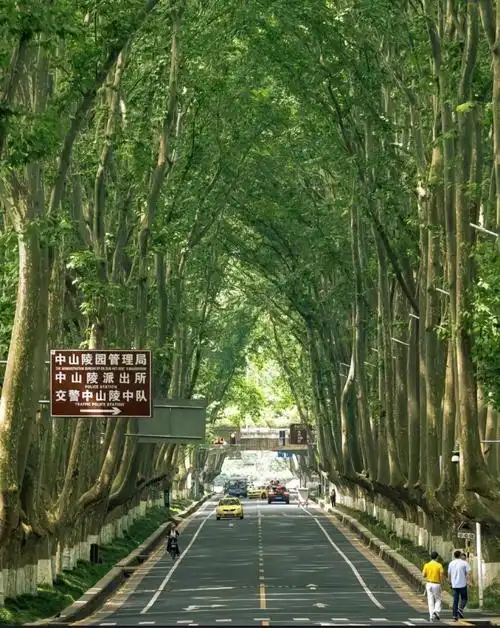
The Yudaojie, a Qing Dynasty royal road site, winding amidst mountains, with ancient stone paving, witnessing over 200 years of imperial splendor. This seven-kilometer road was the imperial route for the emperor’s summer retreats, featuring ancient ginkgo trees and inscriptions, reflecting the fusion of royal etiquette and artisan ingenuity. The street retains typical Qing Dynasty architectural styles, with intricate brick and wood carvings, particularly renowned for auspicious motifs like “Dragon and Phoenix in Harmony” and “Longevity, Happiness, Wealth, and Prosperity,” showcasing imperial grandeur. The core area of Yudaojie concentrates three key attractions: one, the “Imperial Stele Forest,” featuring twelve imperial steles from the Qing Dynasty recording the ceremonies of Emperor Qianlong; two, the “Ancient Trees Viewing Platform,” where century-old ginkgo trees and stone railings create a picturesque scene; and three, the “Royal Post Station Ruins,” with the remnants of stables and messenger houses, recreating the bustling scene of horses and carriages. Along the way, you’ll find ancient complexes like the Temple of Literature, the Temple of Martial Arts, and the Temple of Guan Yu. The soaring eaves of the temples and the stone railings of the road echo each other, forming a unique cultural corridor. As a living heritage of the Qing Dynasty’s royal etiquette system, Yudaojie encapsulates the essence of Han Chinese architectural art. Emperor Qianlong held a “Thousand Old Men Feast” here, and Xiqiao Lan recorded the proofreading of the “Complete Library” here. This road, engraved with the annals of history, is both an extension of the imperial parade and a living museum of Chinese civilization, allowing visitors to touch the pulse of prosperous China on the ancient stone pavement.