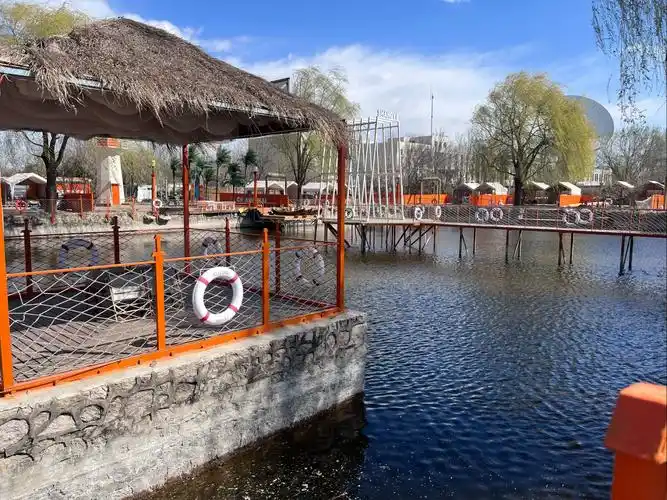
Nanyingzi Market, located west of the Chengde Mountain Resort, serves as a vital commercial and cultural link between Mongolian and Han communities. More than just a hub for ethnically distinctive goods, it functions as a living museum where the spirit of the grasslands intertwines with Central Plains craftsmanship. The market is especially renowned for its stunning Mongolian silverware: silversmiths employ the traditional lost-wax casting technique to craft pendants shaped like morin khuur (horsehead fiddles) and bas-reliefs depicting galloping steeds across the steppe, their silver threads glinting like starlight in the sun.
In the leather section, hand-carved saddles made from whole cowhides are on display. Tanned to a deep tea-brown hue, their surfaces bear intricate patterns concealing shamanic totemic symbols of the Mongolian people.
Deep within the market lies the ruins of a Qing Dynasty imperial procurement office. Its gray-tiled roofs and blue-brick storefronts preserve the original layout of the historic "Mongol-Han Mutual Market." Visitors can try their hand at making traditional grassland milk tea—boiling fresh milk in copper kettles, then adding Fu brick tea and a pinch of salt—the fragrant steam evoking the haunting melodies of the morin khuur.
Each year during the fifth lunar month, the market hosts the "Grassland Bazaar Cultural Festival," where Evenki girls in colorful skirts perform the Anda dance, and Kazakh elders recount the epic tale of "Mansur" in the Kyrgyz language.
This market stands as a testament to Emperor Kangxi’s Qing-era policy of “cultivating civilization through education” to harmonize ethnic relations. During the Qianlong reign, a dedicated administrative office was established here to oversee the "Mongol-Han Mutual Market." Today, embedded in the market wall remains a stone stele inscribed with the character “He” (Harmony), personally calligraphed by Emperor Kangxi in 1735—its bold strokes bearing witness to over a millennium of inter-ethnic trade and cultural exchange.