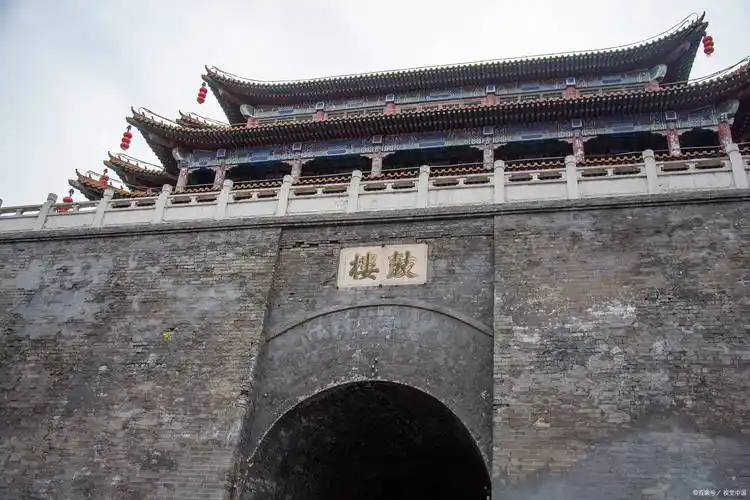
The ancient city wall of Dezhou, a weathered remnant built of rammed earth during the Ming Dynasty, winds through Decheng District like a slumbering dragon. Though its surface is scarred and worn, rows of arrow slits still stand clearly visible along the battlements, silently recounting six centuries of warfare and turmoil. Its most striking feature is the undulating curve of the wall itself—resembling a coiled dragon in motion. From its highest vantage points, one can overlook the entire ancient city, where historic charm blends seamlessly with modernity, creating a view that captivates the imagination.
The core scenic area centers on the ruins of the barbican (wengcheng), where the foundations of the old gate tower still bear clearly discernible brick carvings—like cryptic codes bridging past and present. Scattered along the base of the wall are stone steles from the Ming and Qing dynasties, chronicling the construction and evolution of these defensive fortifications. Most captivating is the section known as the "Dechuan Ancient Road," where rammed-earth walls interweave with sections of blue-brick masonry, and dense arrays of arrow slits line the parapets like ranks of vigilant soldiers, bearing witness to the military secrets of Dezhou’s former status as one of the “Nine Frontier Strongholds.”
Originally constructed during the Hongwu reign of the Ming Dynasty, this wall served as a crucial barrier against Mongol cavalry. The renowned Ming general Qi Jiguang once stationed his troops here, and it was on this very wall that the prototype of his innovative "hollow watchtower" defense system first took shape. More than just a military structure, the wall embodies Dezhou’s strategic significance as the “Throat of Tianjin and Jining,” offering a living museum for studying Ming-era military engineering and northern frontier defense systems. Today, its weathered ramparts continue to stand in silent vigilance, safeguarding the millennia-old memories of this ancient city.