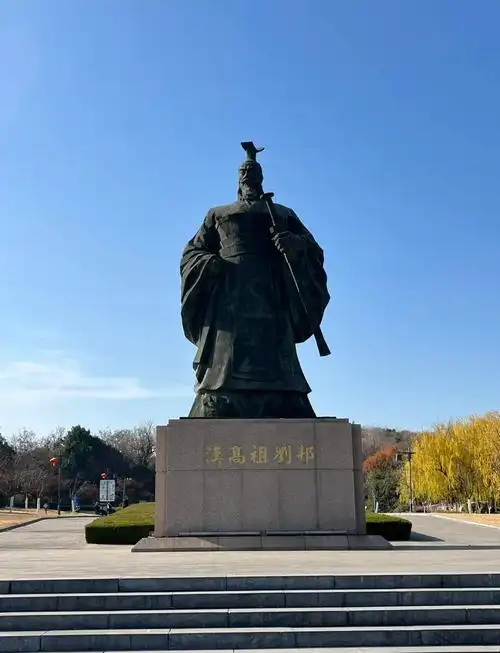
The Xuzhou Han Culture Scenic Area centers on Han Dynasty culture, seamlessly blending historical depth with modern artistic creativity to create an immersive cultural sanctuary for exploring the grandeur of the Han era. Built into the mountainside, the Han tomb complex and the cluster of replica ancient buildings—with their upturned eaves and tiled roofs—stand alongside cobblestone paths subtly embedded with symbols of Han ritual codes. Intricate bronze patterns intertwine with contemporary light-and-shadow installations, forging a dialogue across time.
Key highlights include the Han Terracotta Warrior Formation, featuring over a thousand lifelike ceramic figures that vividly recreate the military might of the Western Han Dynasty, and the Han Stone Relief Museum, which houses dozens of exquisite stone carvings depicting scenes such as chariot processions, kitchen preparations, and banquet feasts—offering a vivid window into daily life during the Han period.
Organized around the theme “Echoes of Han Elegance,” the scenic area comprises three main zones: Han Que Plaza, Chu-Han Street, and the Han Culture Corridor. At Han Que Plaza stands a 26-meter-tall replica Han-style que tower; from its summit, visitors enjoy panoramic views of historic Xuzhou. Chu-Han Street recreates the urban layout of the Qin and Han eras, brimming with antique stalls and Han-inspired souvenirs like terracotta figurines. The Han Culture Corridor employs holographic projection technology to bring to life pivotal historical moments, including Emperor Gaozu (Liu Bang), founder of the Han Dynasty, enfeoffing his vassals, and Xiao He, a key founding statesman of the Western Han, governing the nation with wisdom.
A dedicated “Han Crafts Experience Zone” invites visitors to try their hand at making Han-era roof tiles or participating in bronze-casting workshops.
As a crucial birthplace of Han culture, Xuzhou served as a strategic battleground during the Chu-Han Contention. It was here that Liu Bang, founder of the Han Dynasty, established his capital, and where Emperor Wen of Han (Liu Heng), the fourth emperor of the Western Han, once took refuge. Through excavated artifacts and meticulously reconstructed scenes, the site reveals the achievements of Han civilization—from ritual systems and astronomical calendars to iron-smelting techniques. The literary legacy of Mei Cheng, a renowned Western Han rhapsodist famed for his masterpiece “Seven Stimuli,” resonates through these grounds, while the calligraphic heritage of Cai Yong, a celebrated Eastern Han calligrapher, endures in surviving stone inscriptions—allowing visitors to grasp the profound depth and richness of Han culture as they trace its historical contours.