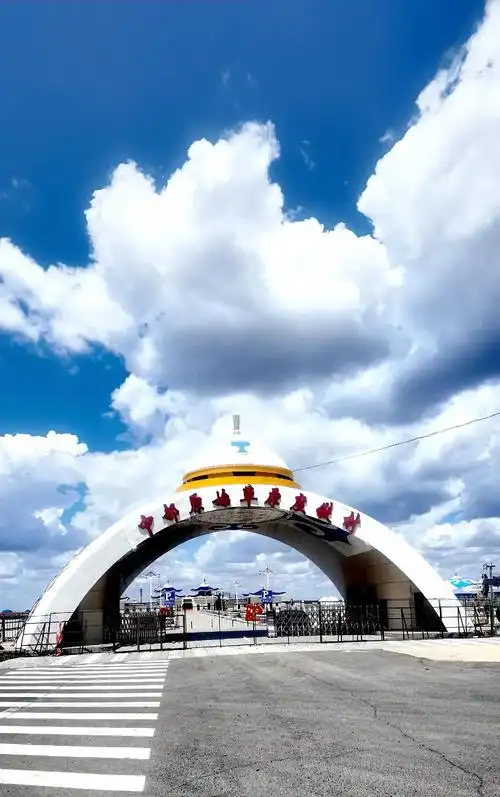
Stretching across the Bashang plateau of Zhangjiakou, the Zhangbei Grassland is the last remaining pristine grassland in northern China, undergoing breathtaking seasonal transformations of color. In summer, emerald meadows unfurl like jade carpets, dotted with blooming wild peonies and golden lotuses, while the air carries the fresh scent of pasture grass. By autumn, the landscape turns into a golden sea, where herders’ carts roll through the swaying grass, leaving behind winding trails.
Visitors can gallop on horseback across endless green fields, feeling the rhythmic beat of hooves against the earth, or gaze up at the Milky Way from within a traditional Mongolian yurt, listening to the haunting melodies of the morin khuur (horsehead fiddle) as it recounts ancient legends.
Deep within the grassland lie unique landscapes such as groves of five-angled maples and vast forests of white birch. In autumn, these woods blaze with color, resembling a spilled palette of paints. At Swan Lake, reeds sway gently in the breeze, and flocks of swans skimming the water send sprays of droplets sparkling like strings of pearls into the air. Ruins of the ancient Great Wall snake along the ridgelines, where earthen ramparts stand in stark contrast against the lush grassland—a striking juxtaposition of past and present.
Historically, this grassland served as a strategic corridor for Genghis Khan’s cavalry during their southward campaigns, and Emperor Kangxi of the Qing Dynasty also inspected this frontier region. Traditional Naadam Festival competitions—featuring wrestling and archery—still preserve the raw vitality of Mongolian nomadic culture. Deep in the heart of the grassland, epic tales of “Mother Steppe” endure, narrating the wisdom of nomadic peoples living in harmony with nature, each fold of the land etched with the legends of horseback-riding tribes.