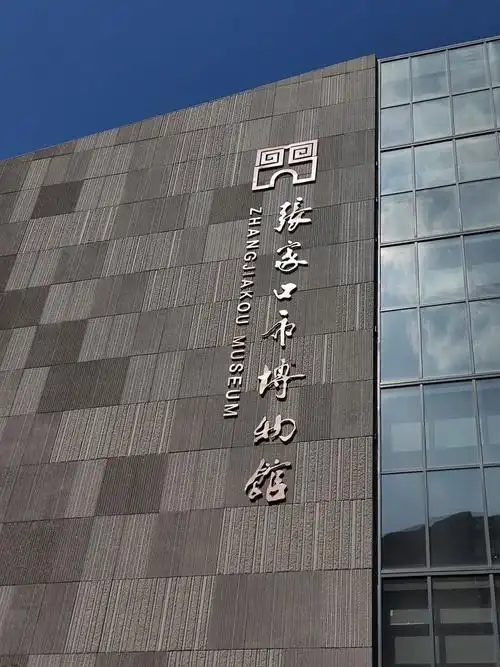
The Zhangjiakou Museum, themed around “the convergence of steppe civilization and frontier culture,” houses over 2,000 artifacts spanning a millennium, collectively weaving a vivid, three-dimensional epic of steppe culture. In the Liao Dynasty Buddhist Sculpture Gallery, exquisitely painted clay statues of bodhisattvas—draped in flowing robes—capture the devout Buddhist faith of nomadic peoples with remarkable delicacy. The Frontier Military Hall displays Ming-era military equipment used by Qi Jiguang—a renowned Ming general famed for repelling Japanese pirates—and an original manuscript of his *Lianbing Shiji* (Practical Records of Military Training), testifying to the strategic ingenuity and valor that fortified the Great Wall defenses. Meanwhile, the Industrial Heritage Section showcases steam locomotive components and textile machine models, reflecting Zhangjiakou’s illustrious past as a key industrial hub of the Jin-Cha-Ji region during modern times.
At the heart of the museum lies the “Dialogue Between Steppe and Frontier” corridor, where holographic projections recreate pivotal historical moments, such as Yelü Abaoji—the founding emperor of the Liao Dynasty—uniting the steppe tribes and establishing the Liao Empire. Rare treasures like fragments of Liao-era Buddhist scriptures and a Mongolian-language handwritten copy of the *Secret History of the Mongols* further attest to the profound cultural integration between steppe and Central Plains civilizations. Particularly striking is the “Jiangnan Beyond the Frontier” exhibit, featuring a Qing-dynasty waterwheel model whose ingenious design highlights Zhangjiakou’s unique role as the “Western Gateway to Beijing”—a vital crossroads where agrarian and nomadic cultures met and mingled.
Through its artifacts, the museum weaves together the spiritual totems of nomadic peoples, the patriotic devotion of frontier soldiers, and the pioneering spirit of industrial progress, allowing visitors to tangibly experience the brilliant sparks generated by the collision and fusion of steppe and Central Plains civilizations.