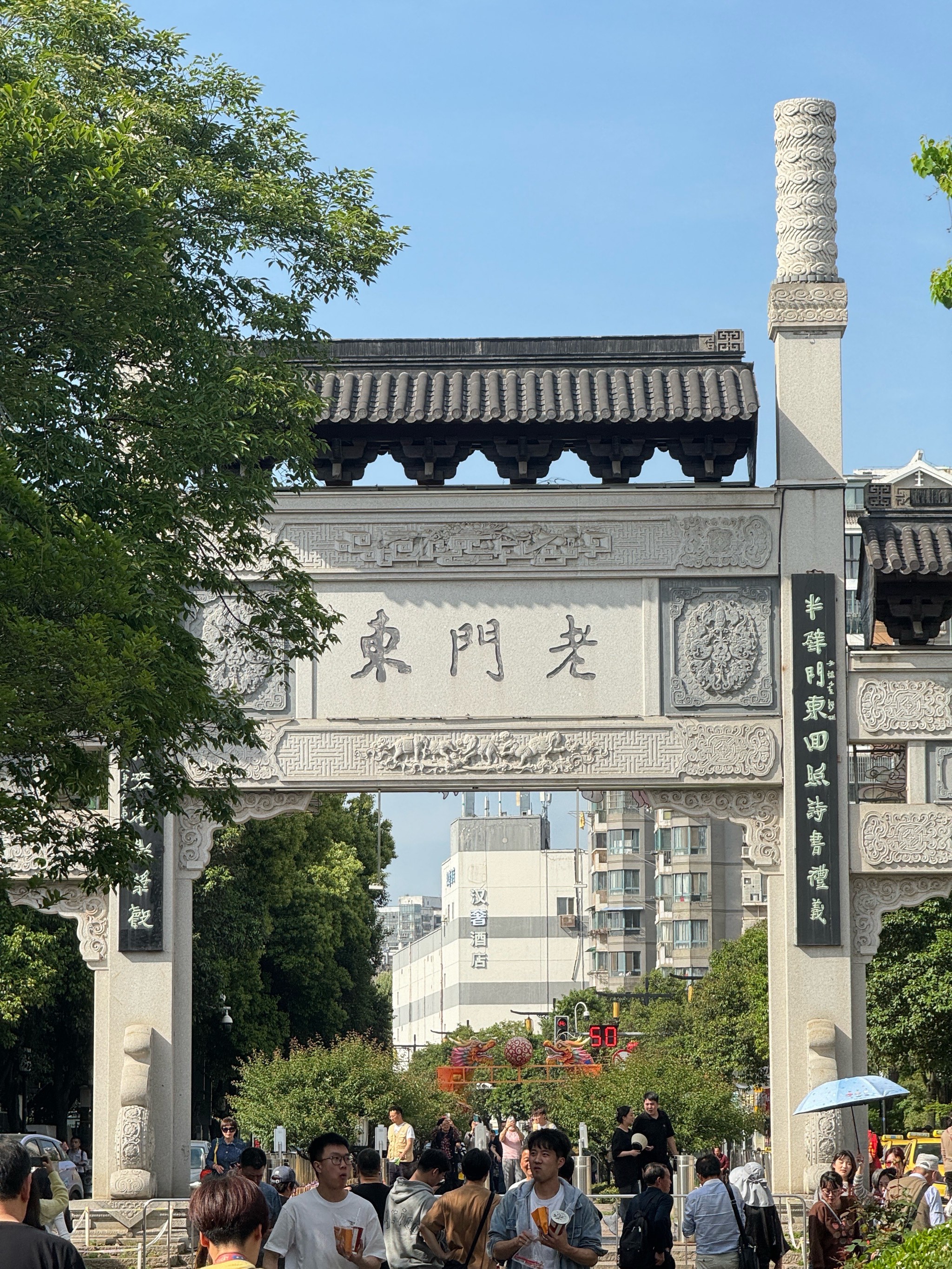
Laomendong is one of the best-preserved historic districts within Nanjing, where clusters of Ming- and Qing-era buildings with grey bricks and dark-tiled roofs glisten softly beneath the shade of plane trees. The sweet fragrance of osmanthus-scented taro soup wafts through its alleys, while the melodic strains of Pingtan storytelling drift from behind intricately carved window lattices—time itself seems to stand still here. More than just a living museum of Nanjing’s folk traditions, Laomendong is also a vibrant corridor of culinary heritage.
Centered around Gongyuan Street, Juyi Lane, and the banks of the Qinhuai River, this district brims with historical layers. Gongyuan Street preserves relics of Ming dynasty imperial examination halls, where countless scholars from humble backgrounds once walked its cobblestone paths toward scholarly fame. Juyi Lane showcases intangible cultural heritage crafts such as Suzhou embroidery and Yun brocade, where master artisans deftly weave millennia-old splendor with nimble fingers. Along the Qinhuai River, dazzling light shows revive the poetic imagery of "painted pleasure boats carrying wine," as sightseeing vessels glide past, accompanied by boatwomen in black awnings softly singing “Jasmine Flower.”
The local snack street evokes legends of the “Eight Beauties of Qinhuai”—courtesans from the late Ming and early Qing dynasties—while delicacies like osmanthus taro soup, salted duck, and steamed pork buns stir nostalgic memories of old Nanjing amid fragrant street-food aromas.
As the heart of Nanjing’s famed “Ten-Li Qinhuai” during the Ming dynasty, Laomendong witnessed the grand preparations for Zheng He’s maritime expeditions and holds echoes of Wen Tianxiang’s heroic resistance against the Yuan dynasty. At the corner of the district, the former residence of Li Xiangjun and the ruins of Houjia Bridge quietly recount tales of romance and patriotism from the turbulent Ming-Qing transition. Today, Laomendong serves not only as a dynamic hub for intangible cultural heritage but also as a cherished cultural landmark where Nanjing residents trace their roots—sustaining the refined elegance of this ancient capital through an ongoing dialogue between past and present.