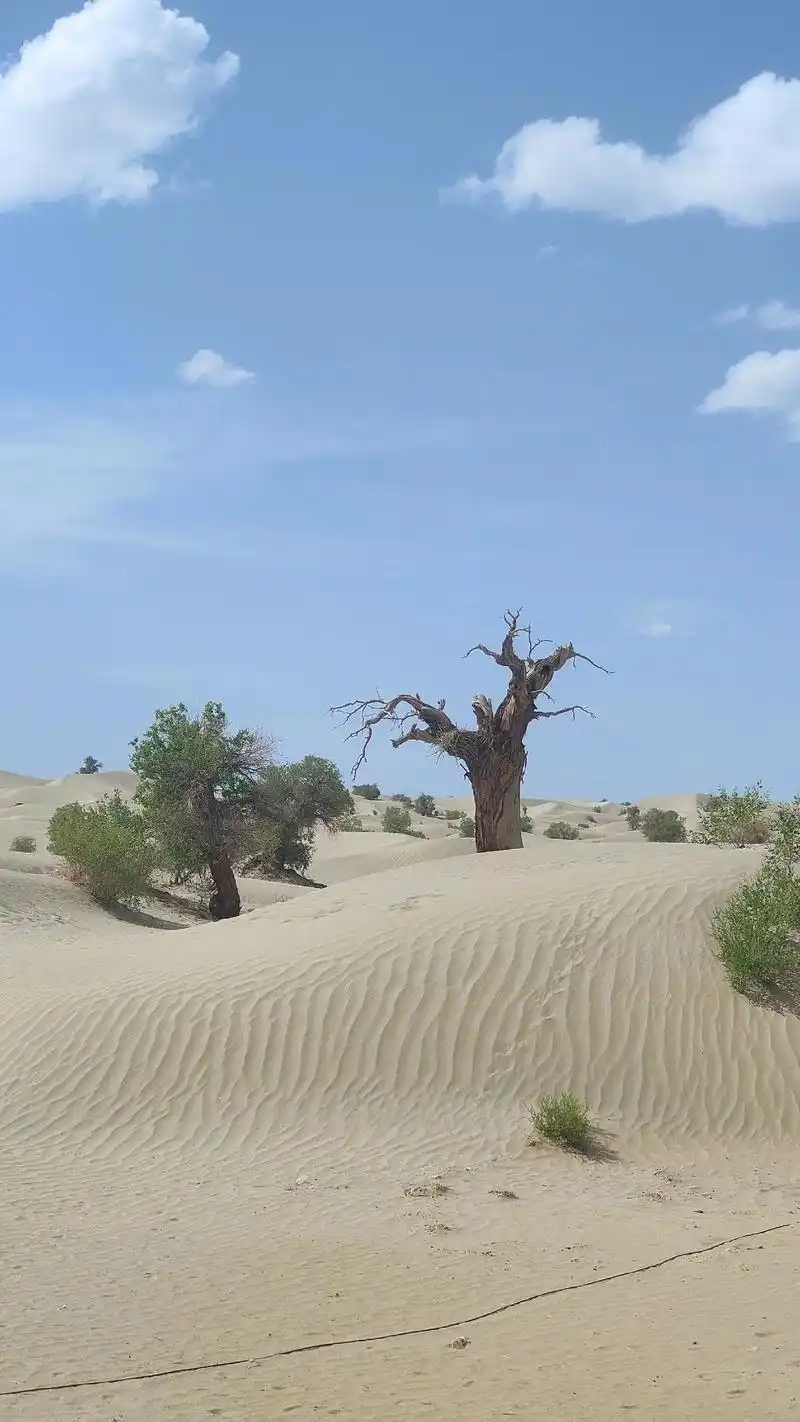
The Taklamakan Desert, located in the southern part of Xinjiang’s Kashgar region, is the largest desert in China and one of the most extensive shifting sand deserts in the world. Spanning over 330,000 square kilometers, it is characterized by towering sand dunes that shift with the wind, creating a dynamic and awe-inspiring landscape. Historically, this desert formed a critical barrier along the ancient Silk Road, where caravans once braved its harsh conditions to transport goods between East and West. The area is rich in archaeological sites, including remnants of ancient Buddhist temples, abandoned settlements, and petroglyphs that reflect the diverse cultures—Uyghur, Han, and others—that once thrived here. Visitors are advised to explore during spring or autumn when temperatures are more moderate, and to travel with experienced guides due to the desert’s remote and unpredictable nature. The Taklamakan is not just a natural wonder but also a symbol of human resilience and cross-cultural exchange, offering deep insights into the history and spirituality of Central Asia.