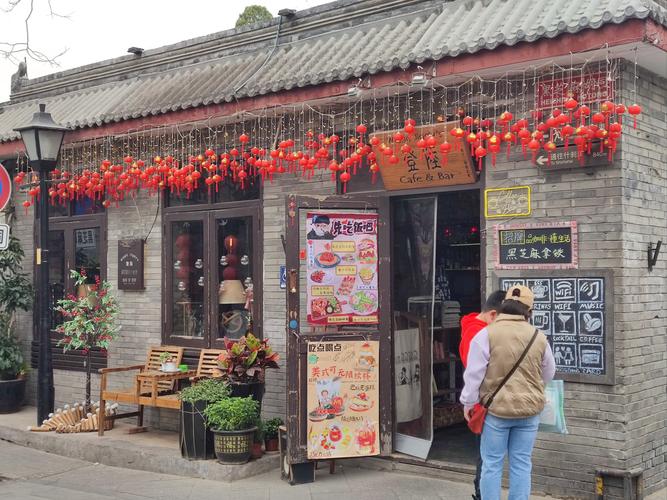
Nanluoguxiang is a time-traveling commercial street in Beijing’s Dongcheng District. Nestled within the traditional gray-tiled, brick-lined hutong fabric, it pulses with the everyday warmth of old Beijing life, yet has been revitalized by trendy boutiques and creative shops. Here, artisan studios showcasing intangible cultural heritage crafts from Liulichang stand alongside avant-garde storefronts of international designer brands. The collision of tradition and modernity lingers like the sweet scent of candied hawthorn drifting through the alleyways—intoxicating and unforgettable. Scattered throughout are teahouses, cafés, and craft workshops, allowing visitors to savor authentic Beijing snacks while soaking in the creative energy of the city’s artistic youth.
As an integral part of the Yuan Dynasty capital’s historic site, Nanluoguxiang took its present layout during the Ming Dynasty and later became a residential quarter for high-ranking officials and nobles during the Qing Dynasty. Deep within the alley, Chengze Garden and Guangfu Temple silently witness the area’s transformation from imperial gardens to bustling urban life. The renowned painter Li Kuchan—a disciple of Qi Baishi—once lived here; his bold, expressive ink brushstrokes echo wonderfully with the vibrant street sounds of the neighborhood. The artistic spirit of Qi Baishi himself—the celebrated late-Qing/early-Republican era master—continues to live on in the cultural and creative stores at the alley’s entrance.
This historic lane carries the cultural memory of Beijing: preserving the upturned eaves and interlocking roof brackets of traditional siheyuan courtyards, while simultaneously nurturing cutting-edge art spaces. As the setting sun gilds the gray brick walls, Nanluoguxiang transforms into a living, three-dimensional scroll, narrating an enduring urban legend rooted in the heart of old Beijing.