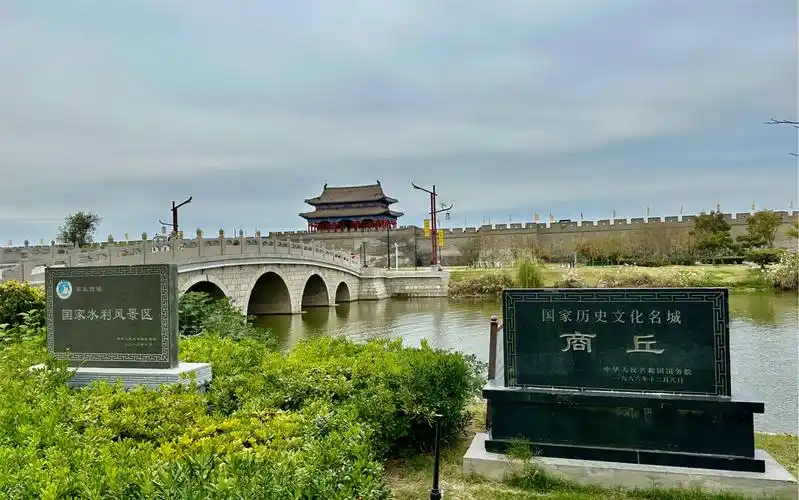
The ancient city of Shangqiu, a millennia-old city inscribed with the codes of Chinese civilization, narrates its 3,000-year history through majestic city walls and an ensemble of historically resonant architecture. The existing wall ruins were reconstructed during the Ming dynasty, yet their grey bricks and tiles still echo architectural styles from the Song dynasty. The gate towers, with their soaring eaves and interlocking brackets, engrave the name "Shang Capital" into every brick and stone.
Within the city, streets and alleys from the Ming and Qing dynasties crisscross in intricate patterns. Antique-style shops and traditional craft workshops complement each other charmingly. The folk songs of eastern Henan drifting through the morning mist and the evening smoke rising from kitchen hearths together sketch the unique charm of "the legacy of ancient Song."
Walking atop the city wall offers a panoramic view of the moat encircling nine gates, each steeped in historical lore: Guide Gate is named after the Ming-era administrative seat of Guide Prefecture; Wenmiao Gate stands beside the ruins of the Confucian Temple, bearing witness to the days when Confucius—the great philosopher of the Spring and Autumn period—lectured here. Well-preserved historic complexes within the city include the Confucian Temple, Martial Temple, and Guandi Temple. Particularly notable is the Lingxing Gate of the Confucian Temple’s Dacheng Hall, which retains exquisite carvings from its Qing-dynasty restoration.
As the endpoint of Confucius’s travels across the states and the hometown where Laozi—the other great Spring and Autumn period thinker—retired into seclusion, Shangqiu has nurtured a distinctive cultural blend of Confucianism and Daoism. This ancient city, which witnessed pivotal moments in Chinese history such as the founding of the Shang dynasty, Confucius’s journeys, and Shang Yang’s reforms, still carries the ancient genetic imprint of the character "Shang." When the setting sun gilds the city walls, one can almost hear the lingering echoes of Emperor Wu of Liang (of the Southern Dynasties) reciting poetry here, feeling the enduring pulse of Chinese civilization.