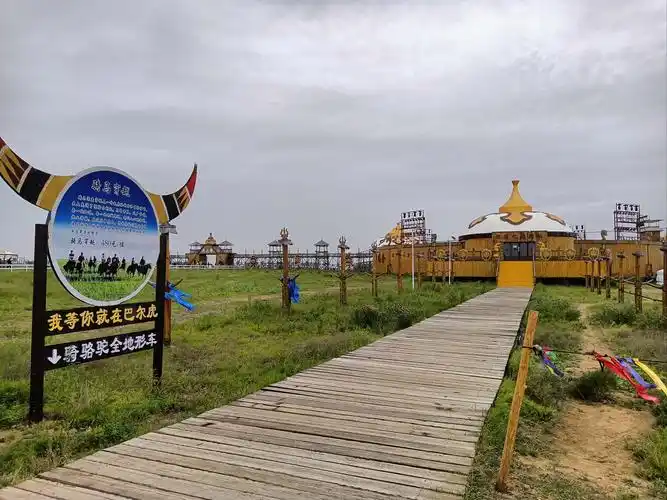
The Barga Folk Museum is nestled in the heart of the Hulunbuir Grassland and serves as a living embodiment of Mongolian nomadic civilization. The museum houses over 300 traditional artifacts from the Barga tribe—from silver-inlaid leather boots to vibrantly painted saddles—each piece encapsulating the wisdom and spiritual beliefs of the steppe people. The main exhibition hall, themed "Following Water and Grass," recreates dynamic scenes that vividly illustrate the complete lifestyle of the Barga people, including migration, herding, and rituals. Silver ornaments shimmer like starlight under the sun, while the intricate patterns on leather boots seem to whisper tales spanning millennia.
The Folk Culture Corridor features a special display of the distinctive "Chagan" attire unique to the Barga tribe. Woven by hand using ancient techniques, its brocade fabric is densely embroidered with patterns concealing shamanic totemic symbols. In the artifact restoration area, visitors can view a gilded silver ewer left behind by Anda Khan, a Ming-era chieftain of the Barga (also leader of the Tumed Mongols). The ewer’s surface is adorned with relief carvings of galloping horses treading upon clouds—a testament to the cultural exchange between the steppe and Central Plains civilizations. The interactive experience zone offers traditional archery and wrestling activities, allowing guests to personally appreciate the agility and strength of Barga warriors.
The museum also delves deeply into the historical ties between the Barga and Khalkha Mongols, tracing their migration routes through ancient maps and documents. A specially designed "Shamanic Ritual" installation uses a 360-degree panoramic screen to immerse viewers in a Barga shaman’s blessing ceremony, accompanied by the resonant, haunting tones of throat singing (Khoomei), giving tangible form to the spiritual faith of nomadic peoples. More than just a repository of artifacts, the museum functions as a genetic archive of steppe civilization, enabling every visitor to feel the millennia-old pulse of Hulunbuir.