The Palace Museum

⭐ 5.00

No. 4 Jingshan Front Street, Dongcheng District, Beijing, The Palace Museum

The Palace Museum
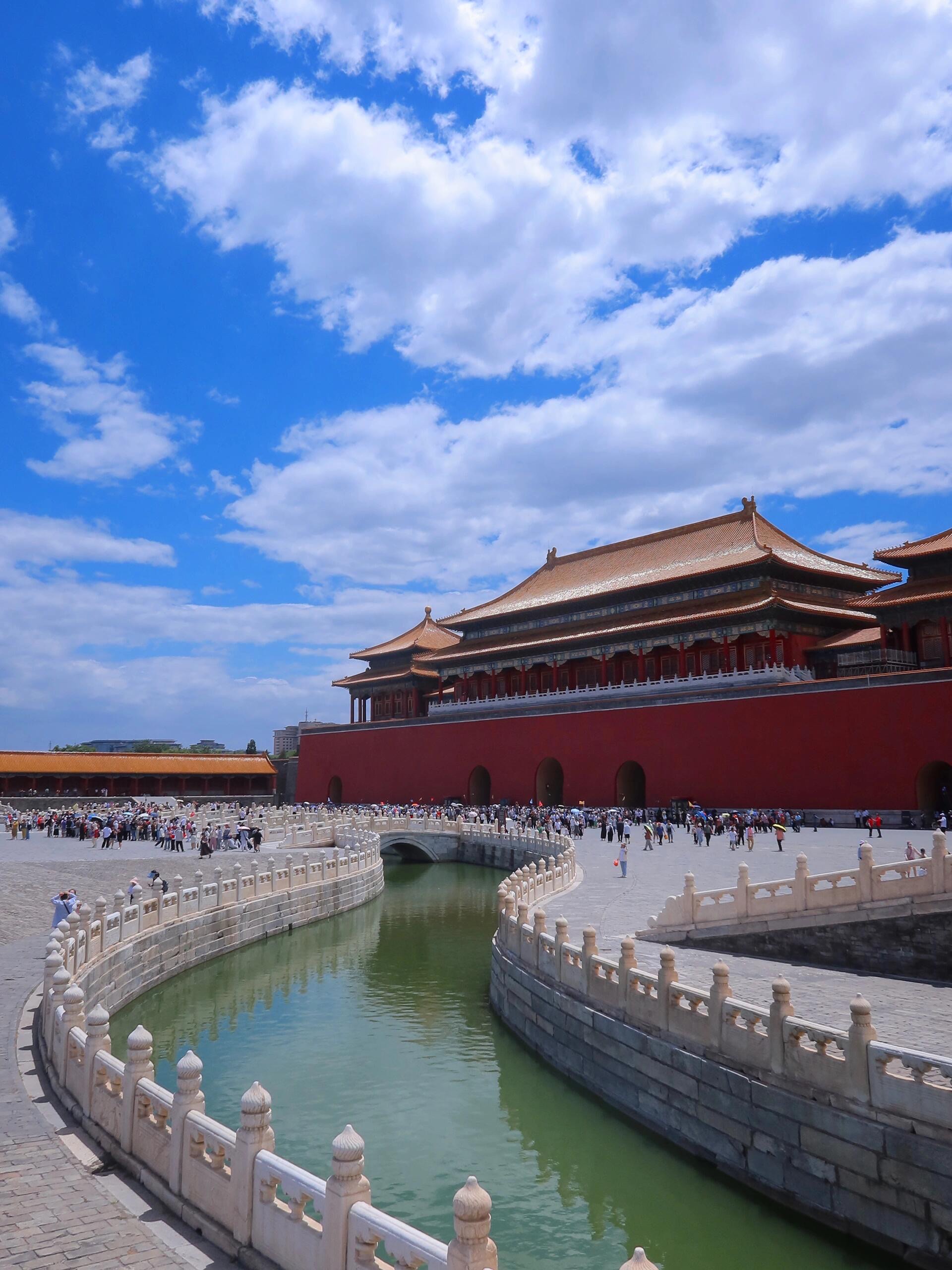
The Forbidden City, the royal palace of the Ming and Qing dynasties, is a magnificent complex of buildings that lies across the Purple Forbidden City like a slumbering dragon. Its 992 palace structures are organized along a central axis, and within its yellow-glazed tiles and red walls flow the imperial legends of six centuries. The marble ramp (danbi) before the Hall of Supreme Harmony bears witness to Zhu Di [Emperor Chengzu of Ming] and his grand ambition of relocating the capital to Beijing; the coiled dragons carved upon it leap and writhe, embodying the eternal symbol of imperial supremacy. The golden-brick floors of the Palace of Heavenly Purity (Qianqinggong), weathered through hundreds of years, still gleam with the brilliance of Ming-era craftsmen's ingenuity. When Qianlong [Emperor Gaozong of Qing] reviewed memorials here, he once wrote the imperial inscription "Sole Decision on the Reins of Power" (Gang Du Duan). Within the Imperial Garden, the artificial rocks of Duixiu Hill conceal feng shui mysteries, while the bronze-cast coiled-dragon pillars left from the Western-style buildings attest to the open mind of Kangxi [Emperor Shengzu of Qing] in introducing Western craftsmanship. The mottled moss beside the Well of Consort Zhen conceals the poignant story of Guangxu [Emperor Dezong of Qing] and Consort Zhen [Consort of the Guangxu Emperor]. The nine dragons of the Nine-Dragon Wall writhe through light and shadow, much like the awe of power and eternity that inspired Yongle [Emperor Chengzu of Ming] to order the construction of this palace. This architectural complex, covering an area of 720,000 square meters, embodies the hierarchical order of a feudal dynasty through its "front court and rear residence" (qian chao hou qin) layout, while integrating the cultural essences of the Han, Manchu, and Mongol peoples. When the setting sun gilds the corners of the towers, the mottled brick walls seem to whisper: this was once the power center during the era when Wanli [Emperor Shenzong of Ming] neglected his duties, and it was also the final refuge of Puyi [Last Emperor of Qing] after his abdication. Every gray brick is inscribed with the rise and fall of China's feudal society, and every furnishing tells of the joys and sorrows of emperors and ministers alike.

Traveler reviews

Xiucai said that Tour Li took us around the National Museum and the Forbidden City. The Forbidden City is huge, absolutely beautiful, and packed with so much history and cultural heritage. The National Museum is massive too—the treasures inside a...
⭐ 5 · Sam Park Expand
As a Xiucai student, I'd say Li the tour guide took me through the National Museum and the Forbidden City, and it was incredible. The National Museum's collection is absolutely massive - spanning from ancient times to modern China, it's basically a living encyclopedia of Chinese civilization. You honestly can't see it all in one day. Then the Forbidden City just blew me away with its grand architecture; the red walls and yellow tiles re...
⭐ 5 · Drew Carter Expand