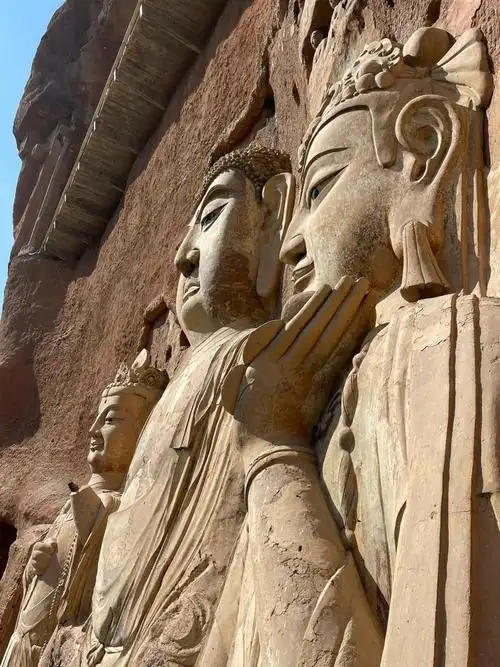
Dongya Grottoes is renowned for its magnificent cliff-carved Buddhist sculptures from the Tang Dynasty. These sculptures, numbering over a thousand, are meticulously carved into the mountainside, depicting a breathtaking array of Buddha figures that range from solemn and majestic to compassionate and serene. The main cave, “Da Yuan Dong,” features a towering seven-meter-high Maitreya Buddha statue, holding a staff and exhibiting a benevolent expression, standing upon a lotus platform, embodying the Bodhisattva’s vow to become a Buddha “as long as hell remains empty.” The surrounding caves contain thousands of Kannon statues with intricate hands and feet, resembling lotuses, each hand grasping and observing all beings, reflecting the religious significance of Mount Jiuhua as a “Land of the Earth-Treasure Buddha.” Deep within the grottoes, inscribed are the three characters “Ciyen Si” (Ciren Si) – “Ciren Si” – written by the renowned monk Fahui (Fahui) of the Tang Dynasty, showcasing his powerful calligraphy. The ceiling murals, crafted from ground jade and stone pigments, have endured for a millennium and still shine brilliantly, demonstrating the Tang Dynasty artisans’ mastery of mineral pigments. Scattered along the cliff walls are “Five Hundred Lohan Rocks,” realistically sculpted Lohan figures, some holding staffs or scriptures, their folds and wrinkles capturing the pinnacle of Tang Dynasty sculpture artistry. As a vital carrier of Jiuhua Mountain’s Buddhist culture, Dongya Grottoes is not only an artistic treasure but also a living testament to the eastward transmission of Buddhism. The surviving “Maitreya True Record” inscriptions, penned by the Tang Dynasty monk Yijing (Yijing), document his travels around Jiuhua Mountain, providing valuable literature for studying the history of Buddhist propagation. When the morning sun penetrates the clouds and illuminates the grottoes, the thousand Buddha statues appear to reappear in the light and shadow, evoking a sense of awe and reverence.