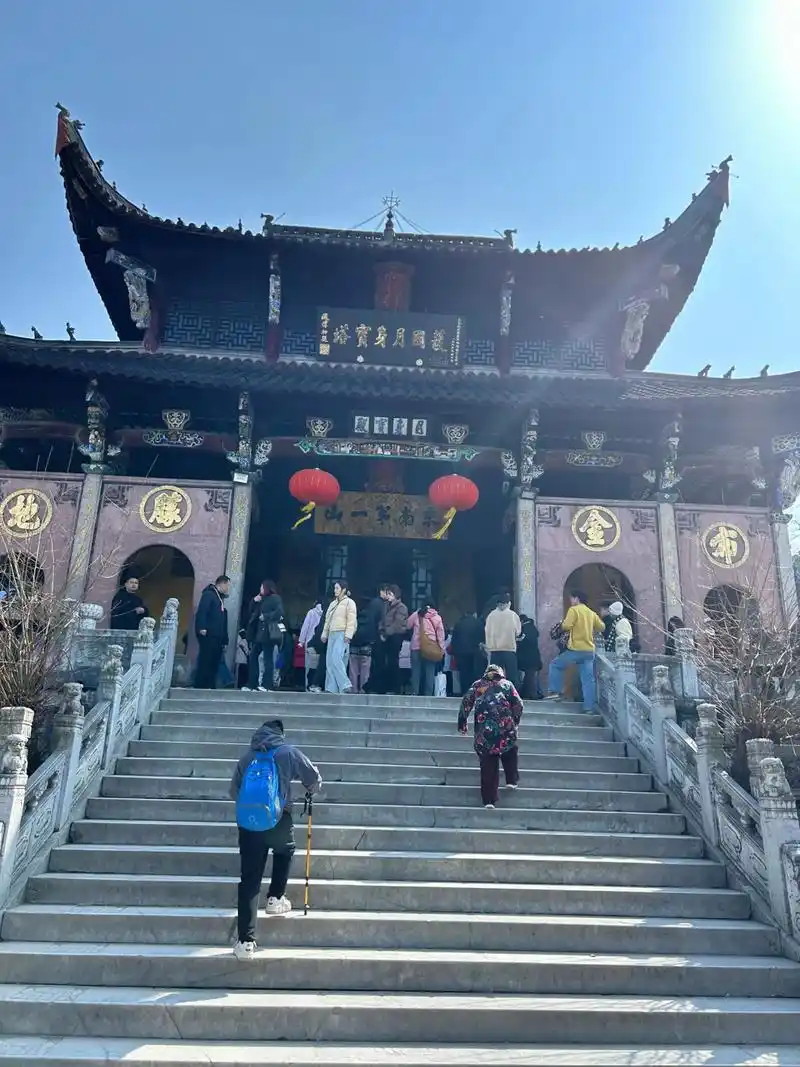
The Rouzhi Pagoda, located on Jiuhua Mountain in Anhui Province, China, is one of the most venerated sites in Chinese Buddhism. It enshrines the 'incorruptible body' (rouzhi) of a monk—typically a high-ranking Buddhist master whose physical form remains miraculously intact after death—a phenomenon deeply respected in Mahayana Buddhism as a sign of profound spiritual attainment. The pagoda itself, built during the Tang Dynasty and later renovated, features traditional Chinese architecture with intricate carvings and sacred relics. Jiuhua Mountain, one of the Four Sacred Mountains of Chinese Buddhism, has been a pilgrimage destination for over 1,200 years, drawing monks, scholars, and devotees seeking enlightenment. Visitors are encouraged to explore the surrounding temples, meditate in quiet courtyards, and observe daily rituals such as chanting and incense offerings. The site embodies the fusion of nature, spirituality, and cultural heritage—offering not only a glimpse into Buddhist philosophy but also a profound experience of inner peace and reverence for the enduring human quest for transcendence.