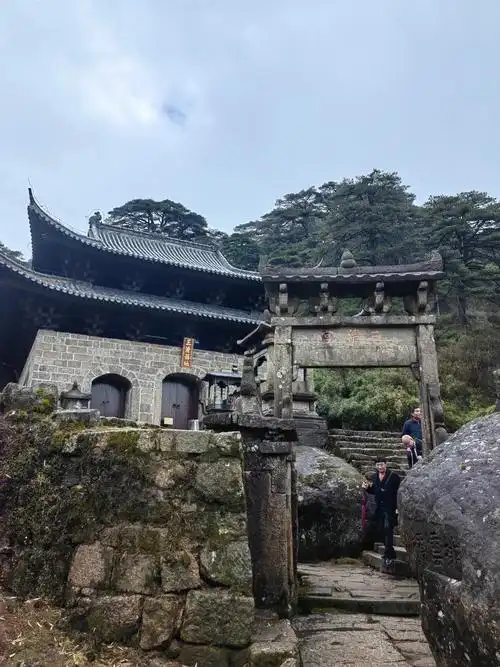
A sacred place of virtue located on the summit of Sanqing Mountain, it is one of the origins of Daoist culture, renowned as “the first blessed land in the world.” Here, the mountains are covered in lush greenery, and clouds and mist swirl around, with Daoist temples and monasteries built into the mountains, harmoniously blending with the natural landscape to create a wonderful realm of “Dao follows nature.” The Sanqing Palace is the core scenic area, with its architectural complex arranged along the mountain’s contours, with upturned eaves and pine trees complementing each other, and within the halls, the deities of Yuqing, Shangqing, and Xuanqing are worshipped. For centuries, incense has been offered here, and pilgrims come in droves. The Yutai Scenic Area is famous for its cloud sea wonders; after rain and the first rays of sunshine, layers of cloud waves rise from the valley floor, resembling a fairyland. The Sunshine Coast is renowned for its sunrise wonders; when the sun is at its peak, the mountain scenery and the sunlight blend together, like a scroll painting from the heavens. The cliff carvings are scattered throughout the mountains, and generations of Daoist masters have inscribed them on the rocks, expressing their feelings, dedicating themselves, or explaining Daoist principles. Sanqing Mountain became a sacred place for Daoist practice since the Eastern Han Dynasty when Zhang Daoqing practiced alchemy here. Ge Hong wrote “Bao Pu Zi” here during the Eastern Jin Dynasty, integrating Daoist thought with alchemy, creating the Daoist Dan Dao system. The “Sanqing Fudi” inscription currently exists in the mountain, written by Ming Dynasty Daoist Zhang Jiuzong, with powerful brushstrokes, showcasing the essence of Daoist culture. The prayer halls are arranged skillfully, with “Sanqing” as the axis, integrating yin and yang, five elements, and reflecting the Daoist concept of harmony between heaven and man, allowing worshippers to feel the spiritual energy of heaven and earth. This place is not only a sacred place for Daoism, but also a symbol of the spirit of Chinese civilization, inspiring people to yearn for and lose themselves in its beauty.