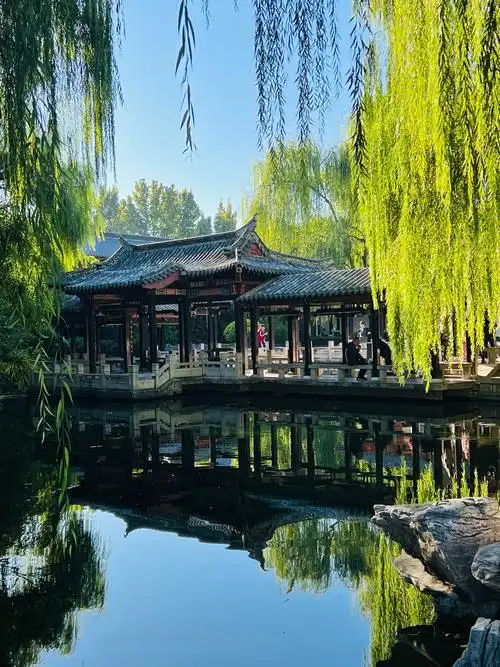
Nanning Longtan Park is a karst landscape gem nestled along the Yongjiang River, renowned for its three core attractions—“Longtan Waterfall,” “Dragon Palace Cave,” and the “Ethnic Cultural Village”—which together form a dynamic, living scroll of natural scenery. The Longtan Waterfall cascades dramatically from a cliff, its misty spray refracting brilliant rainbows; below, the emerald pool ripples gently, mirroring the sheer cliffs and ancient banyan trees draped in lush foliage, creating a scene akin to a classical ink-wash painting.
Inside the Dragon Palace Cave, stalactites coil like dragon scales, while stalagmites rise like spears and halberds. A hidden river murmurs softly through the cavern, echoing tales of geological wonders spanning hundreds of millions of years.
Perched on the hillside, the Zhuang Ethnic Village charms with its red-tiled, yellow-walled wooden houses entwined with climbing vines. Here, skilled weavers deftly craft intricate patterns of Zhuang brocade, their fingers weaving the totems and legends of the ancient Baiyue peoples into vivid textile narratives.
This landscape embodies Nanning’s millennia-old cultural heritage. In the Qing Dynasty, the scholar Li Fu once composed verses celebrating the famed “Moonlit Night at Longtan.” Meanwhile, the Zhuang people’s ancestral veneration of the dragon as a sacred totem continues today through rituals still practiced in the village. Within the park stands the “Ancient Longtan Banyan,” a tree over 300 years old whose gnarled branches spread like an umbrella; Song Dynasty copper coins unearthed from its hollow trunk attest to this site’s historical role as a bustling stop on the ancient Yongzhou trade route.
Gliding through the cave by bamboo raft, listening to the interplay of flowing water and resonant chime-like echoes, one feels transported into the “enchanted realm of mountains and rivers” described in the *Glimpses of Guilin’s Local Customs*. More than just a masterpiece of nature, Longtan Park is a living museum where Zhuang culture and history flow seamlessly through time.