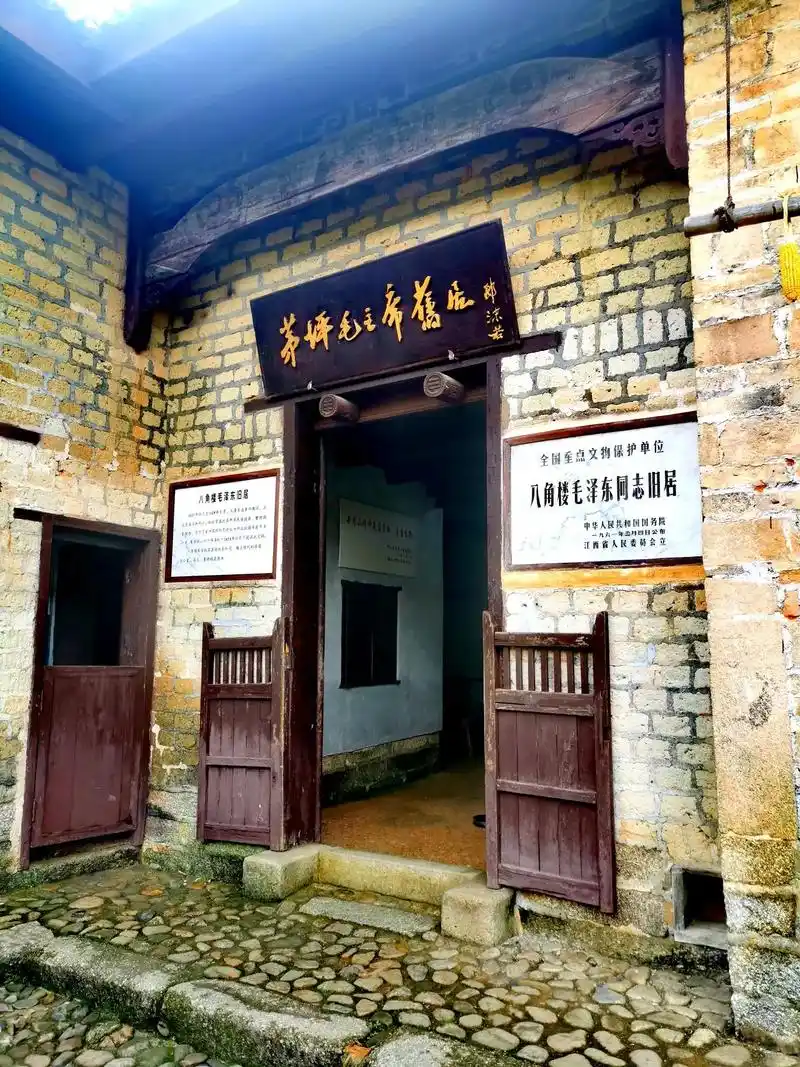
The Octagonal Pavilion in Maoping, located in the scenic Jinggangshan Mountain region, is a historically significant structure that once served as Mao Zedong’s residence and office during the 1920s. This wooden building, with its distinctive octagonal roof, was where Mao drafted important documents, including 'Why Can the Red Regime Exist in China?', which laid the ideological foundation for rural-based revolution. The pavilion stands as a powerful symbol of resilience, innovation, and strategic thinking during the Chinese revolution. Surrounded by lush mountains and rich cultural heritage, it attracts history enthusiasts, students, and tourists seeking to understand how the Communist movement took root in rural China. Visitors are encouraged to explore the nearby museum, which displays original artifacts, photographs, and manuscripts, offering deeper insight into Mao’s revolutionary philosophy. A visit here is not only educational but also emotionally moving—connecting modern audiences with the ideals and sacrifices of early revolutionaries. The site is part of the larger Jinggangshan Revolutionary Memorial Area, making it ideal for multi-day cultural tours focused on China’s revolutionary past.