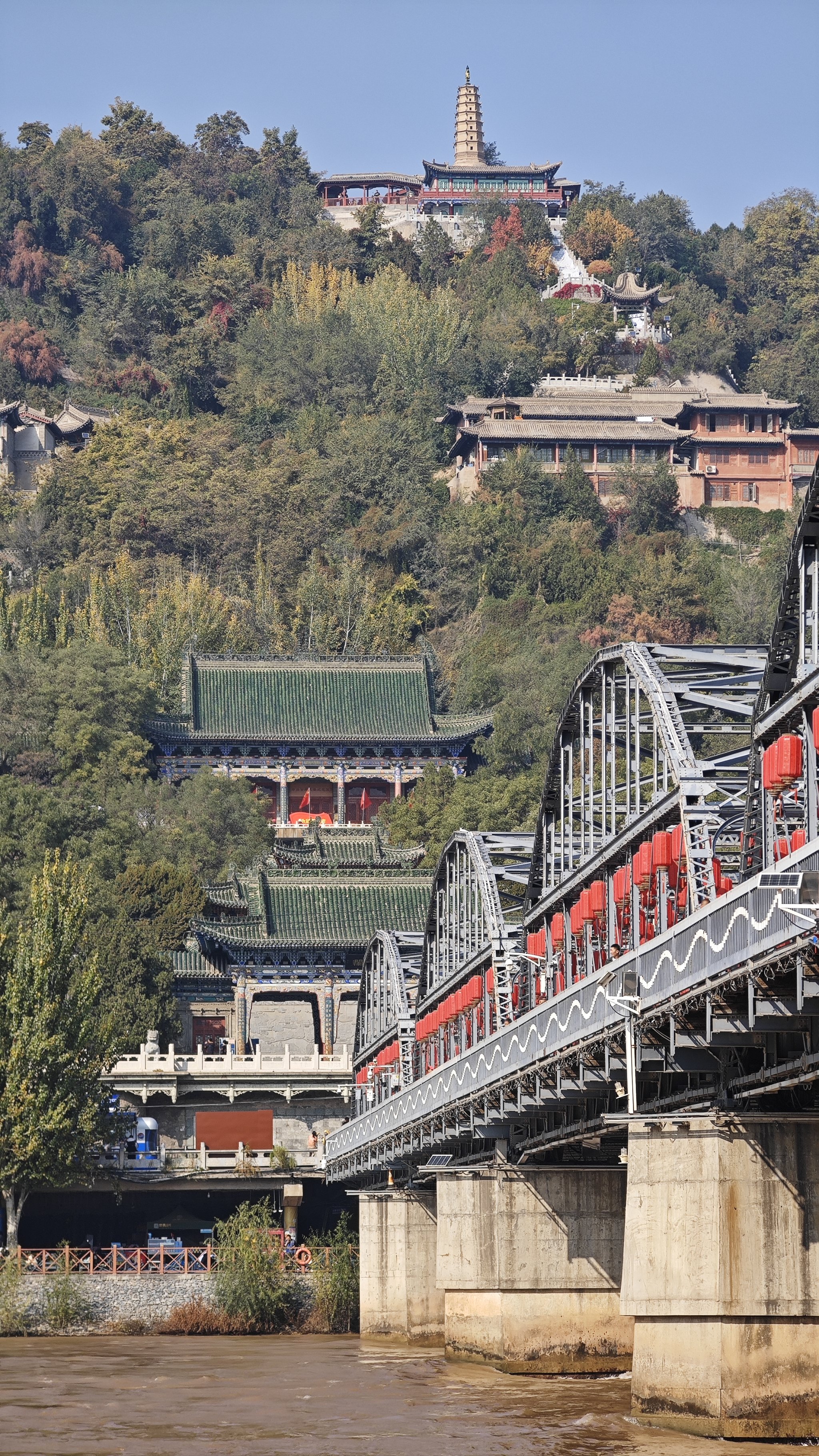
Baita Mountain Park is nestled along the banks of the Yellow River in Chengguan District, Lanzhou, offering an urban green oasis that seamlessly blends natural scenery with cultural heritage. From the summit, the Yellow River winds eastward like a jade ribbon, while the city’s buildings and pavilions unfold below—a breathtaking vista that refreshes the spirit. Atop the mountain stands the iconic White Pagoda, its pristine white structure adorned with upturned eaves that reflect gracefully against the shimmering river, making it one of Lanzhou’s most recognizable landmarks. Ancient temples nestle among the hills, their incense smoke curling skyward, while the rustling of pines mingles with the resonant tones of temple bells, creating an ethereal, meditative atmosphere.
Key attractions within the park include the White Pagoda, Guanyin Cave, the Observation Deck, shaded forest trails, and the Yellow River Stone Forest. The White Pagoda, originally built during the Qing dynasty by a Gelugpa (Yellow Hat Sect) Tibetan Buddhist monastery, features intricate carvings and subtly incorporates the six-syllable Buddhist mantra "Om Mani Padme Hum." Guanyin Cave, a Ming-era temple, houses a statue of Guanyin (the Bodhisattva of Compassion); outside, vines cling to weathered stone walls, adding a touch of venerable charm. The Observation Deck offers the finest panoramic view of Lanzhou—especially at dusk, when the setting sun bathes the Yellow River in golden-red hues, striking a vivid contrast against the pagoda’s pure white silhouette.
Since ancient times, Baita Mountain has inspired poets and scholars. Zhang Shaomei, a Qing-dynasty official and poet, once composed verses here praising its grandeur as the “First Mountain along the Yellow River.” For over a millennium, the mountain’s temples have preserved Buddhist traditions, becoming a cherished spiritual sanctuary for Lanzhou residents. Today, the park serves not only as a popular retreat for locals seeking leisure and exercise but also as a living embodiment of the profound legacy of Yellow River civilization and Silk Road culture—a true synthesis of nature and human heritage in Lanzhou.