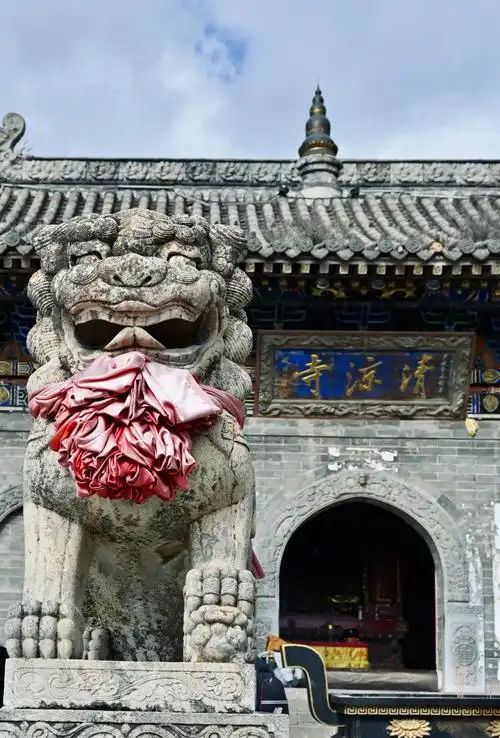
Qingliang Temple, situated on the sacred Wutai Mountain in Shanxi Province, China, is one of the five major Buddhist temples on this revered pilgrimage site. Established during the Tang Dynasty (618–907 AD), the temple has long been a center for Chan (Zen) Buddhism, attracting monks, scholars, and pilgrims from across Asia. The temple complex features traditional Chinese architectural elements—wooden halls, ornate roofs, and tranquil courtyards—set against the backdrop of lush mountains and clear skies. Its spiritual ambiance is enhanced by daily rituals, chanting ceremonies, and meditation sessions open to respectful visitors. Historically, Qingliang Temple played a crucial role in the development of Chinese Buddhism, particularly as a hub for translating Buddhist scriptures into Chinese. Travelers are encouraged to visit early in the morning to experience the peaceful sunrise over the peaks and to explore the surrounding trails that lead to other temples and natural wonders. Beyond its religious importance, the temple embodies the harmony between nature and spirituality, offering deep cultural insights into Chinese philosophy, art, and monastic life.